Tag Archives: book-review

The Kick-About #125 ‘the Rorschach Test’ (part 1)

Most people are familiar with the Rorschach Test invented in 1921 by Hermann Rorschach. It‘s so often used as a gag in a cartoon or a sitcom that even youngsters get the general idea. It’s a psychological test, where a patient looks at the ink blot and describes what they see in it – often an animal, face or scene.
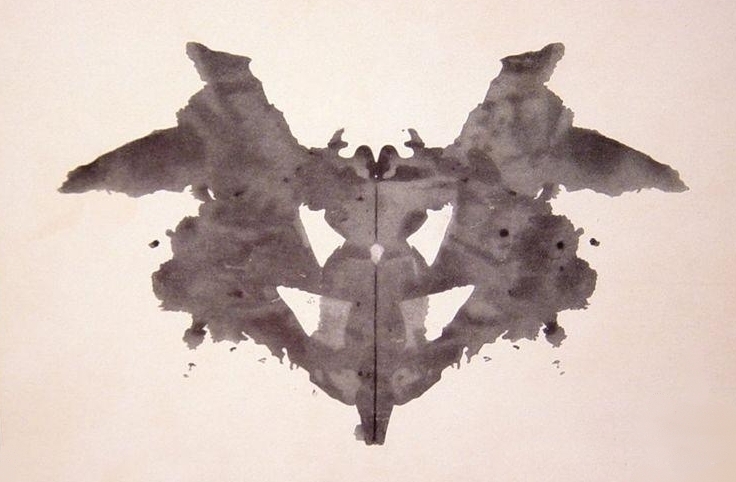
By Hermann Rorschach (died 1922)

But I wasn’t aware that Klecksography was a thing in the late 19th century. Making images from ink blots, it’s an activity that I often enjoy as a warm-up exercise for drawing, and to create new characters. I usually call it blob drawing, which isn’t nearly as fancy, but I suppose my blobs are a bit more blobby in shape than blotty, and they lack the symmetry too.

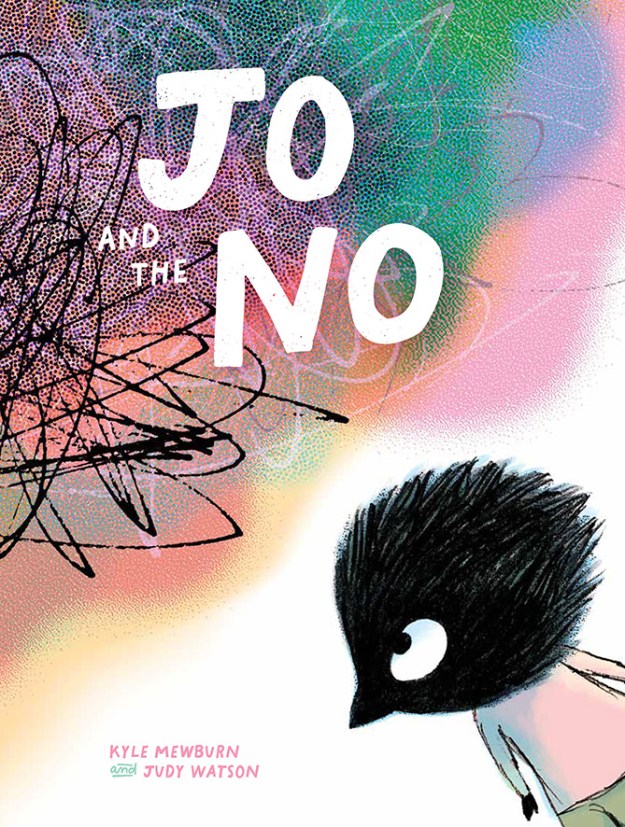
I thought this prompt was a great opportunity to join in the Kick-About again, because I already have some artwork to begin with, and it’s not my collection of blob drawings. It’s this illustration (below) from my upcoming picture book with Kyle Mewburn, Jo and the NO. In this illustration, Jo traverses ‘lakes as still as mirrors’. So creating background mountains and their reflections from Rorschach-style inkblots seemed like a good idea.

Here the NO in the back of the punt seems to be observing itself in the still waters because I wanted to suggest self reflection as well as the physical reflection of the scenery. You’d think it would be easy to whip up a few inkblots and plonk them into the image. But it was surprisingly hard to get from the successful rough illustration (below) to a successful final illustration.
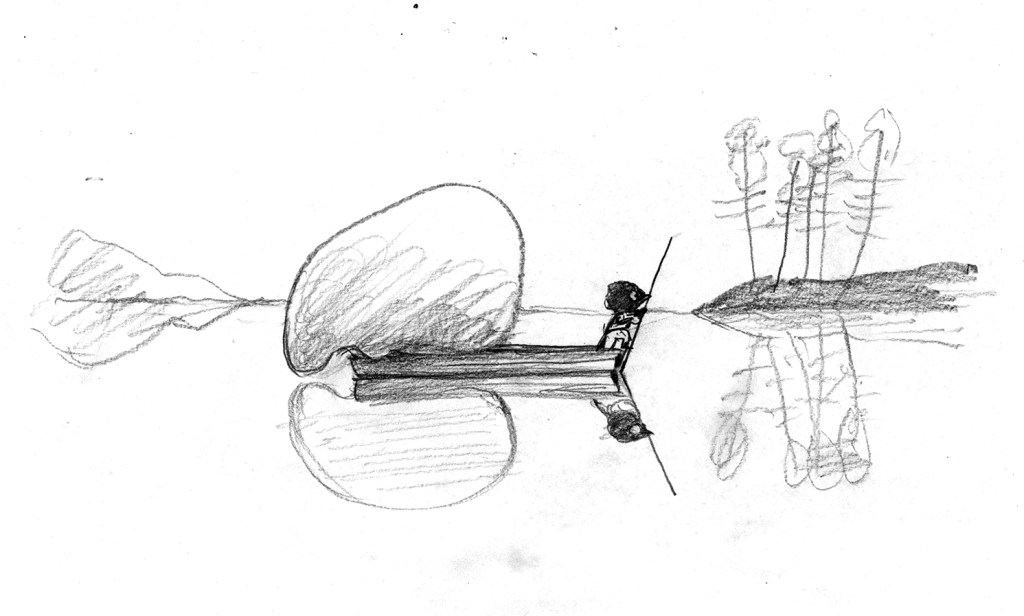
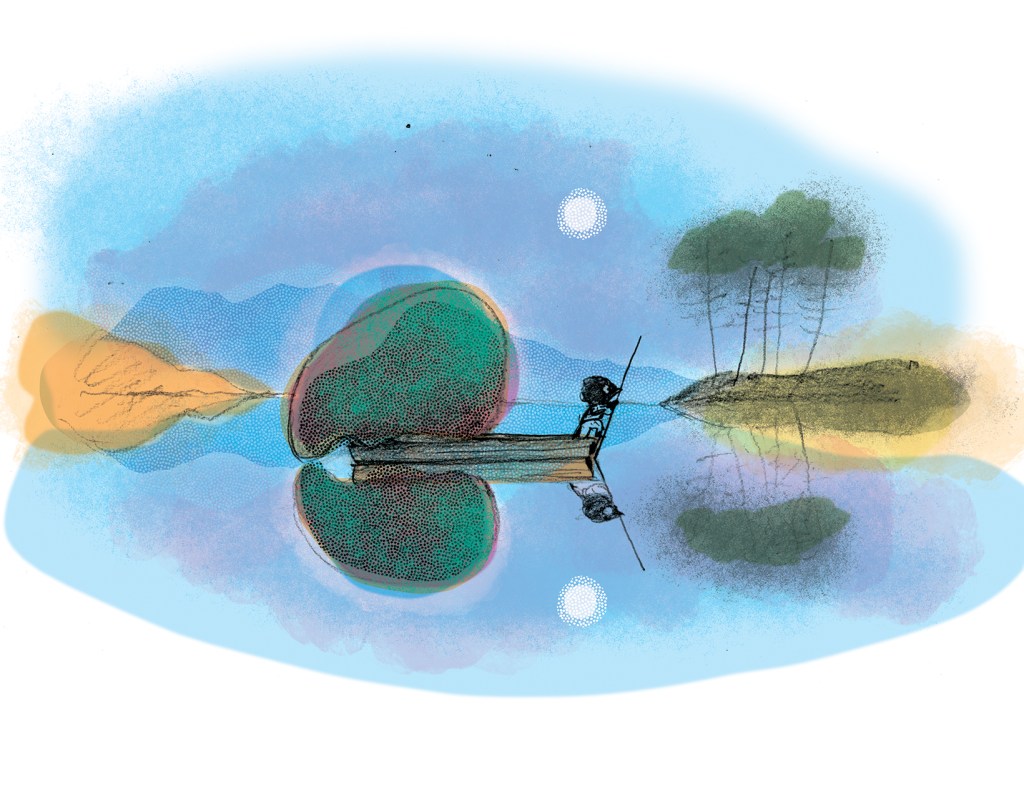
The original sketch started as a thumbnail drawing, intended to share a double page spread with three other vignettes. But when we decided that the book was going to 40 pages this scene acquired a double page spread of its own with the impediment of the gutter down the middle of the illustration. So getting the balance of the illustration to work again in a different format was a challenge. The enlarged range of mountains and trees when loaded together on the page, very quickly distracted from and overwhelmed our protagonists, instead of highlighting them and giving significance to them.

Also I didn’t want my reflections to be perfect, because imperfect things are always more interesting and have more visual energy. But I found that if they were too interesting, they became distracting. So there was a lot of trial and error involved with recreating the transparent freshness of the rough sketch within a new framework.

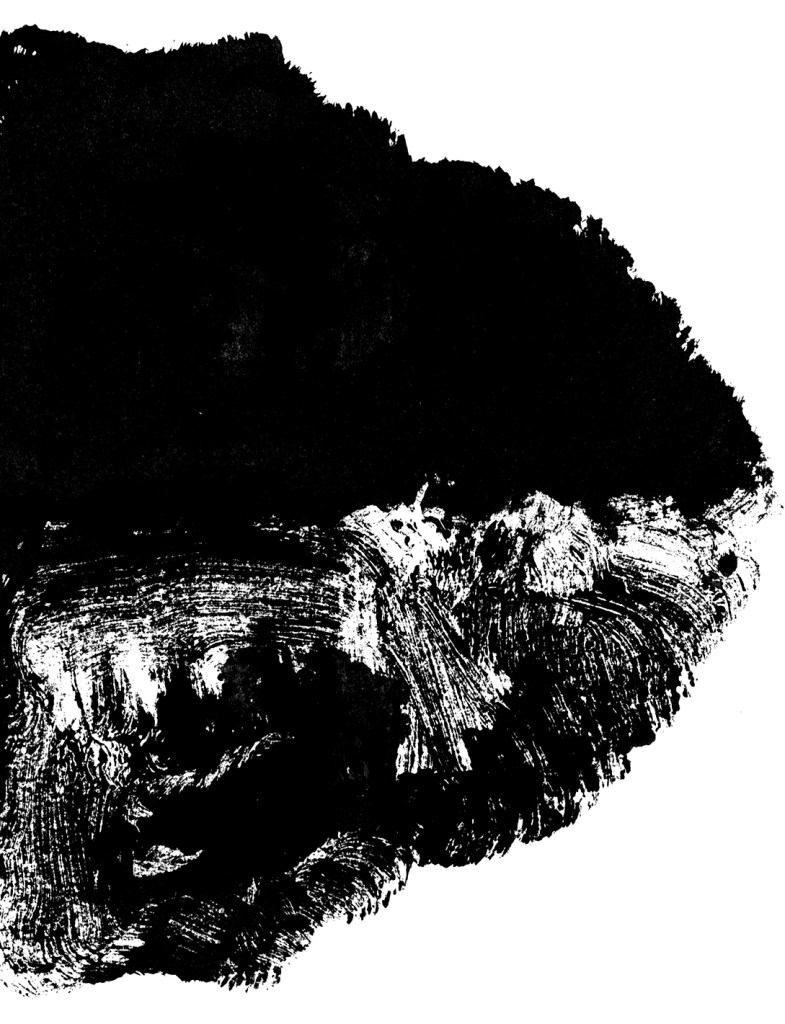
Below are a few of the monotypes I produced to create islands and mountains for the background. I painted a loose shape, suggestive of an island with vegetation, and then folded the paper in half for the reflection.

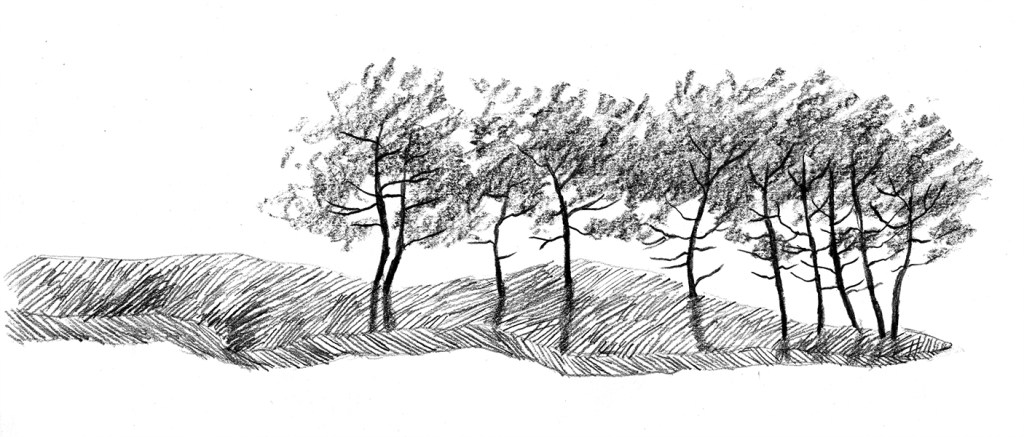
Below are some of the more detailed experiments, testing out graphite instead of paint. These fell into the too distracting category. There are always countless illustrations made for a picture book (some of them very time consuming) that don’t make the final cut. But they may be interesting in their own right.

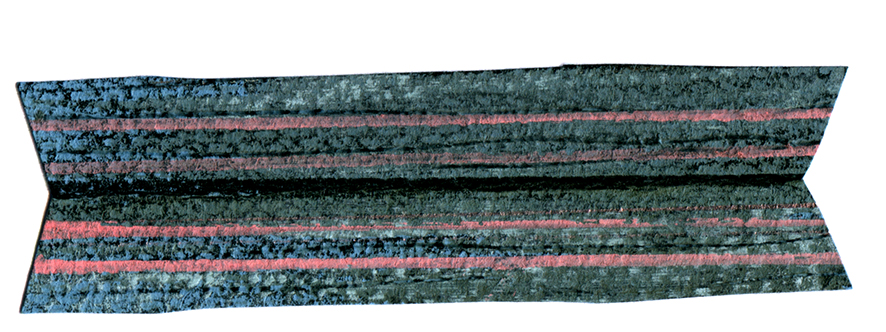
And I have to include the other hand-made element – a little collage boat made from Ingres paper and soft pastels. It’s so nice and wonky. One of my favourite bits.
For the final art, I did end up using a digital reflection for some elements, and those reflections did become ‘perfect’. But most of the tree reflections were drawn by hand and so they don’t perfectly match their right-side-up counterparts. (This brings about a nice effect used by landscape architects, where a repeating pattern with small variations is pleasing but never monotonous.) Embracing these inconsistencies was part of my journey of letting go of hard rules.

More on Rorschach ink blots in the next post. In the meantime, anyone who is interested in pre-ordering Jo and the NO, please click here or on the cover image below.
Hazel’s Treehouse – floriferous!

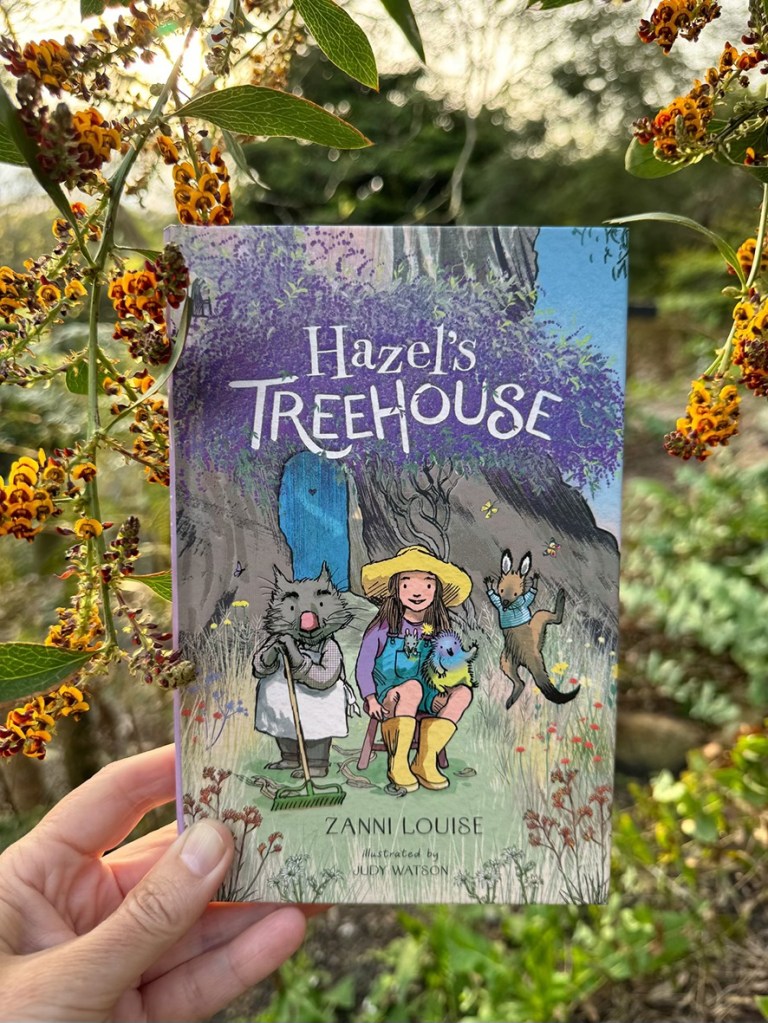
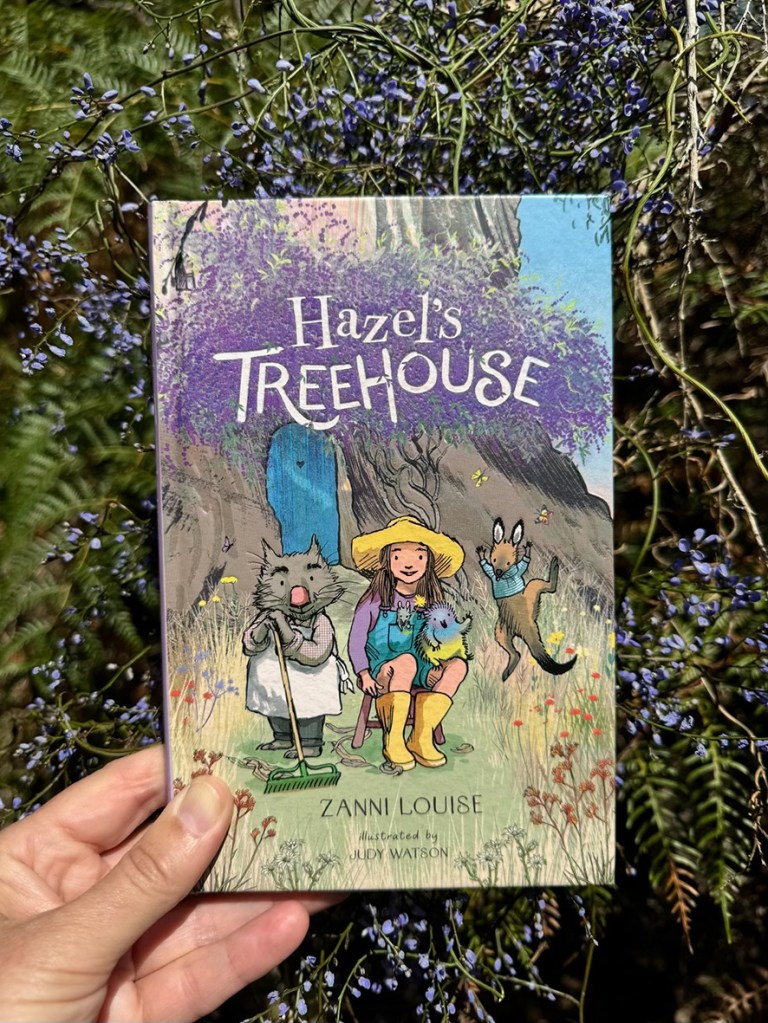
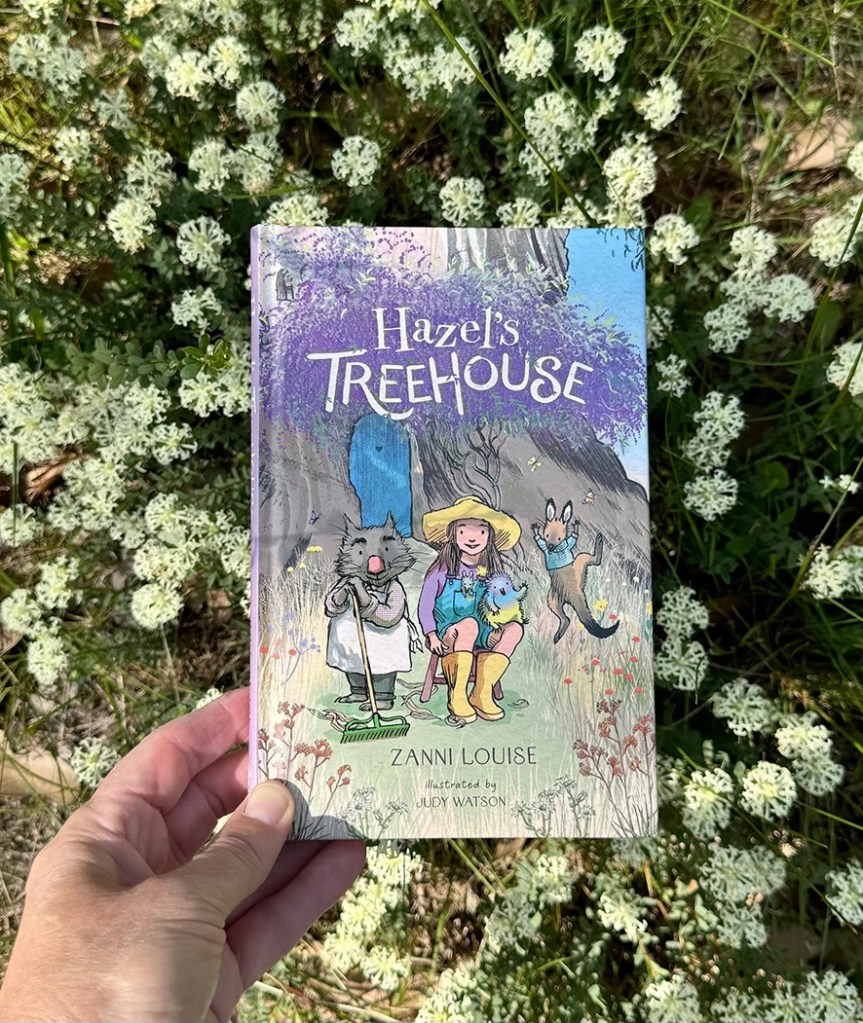
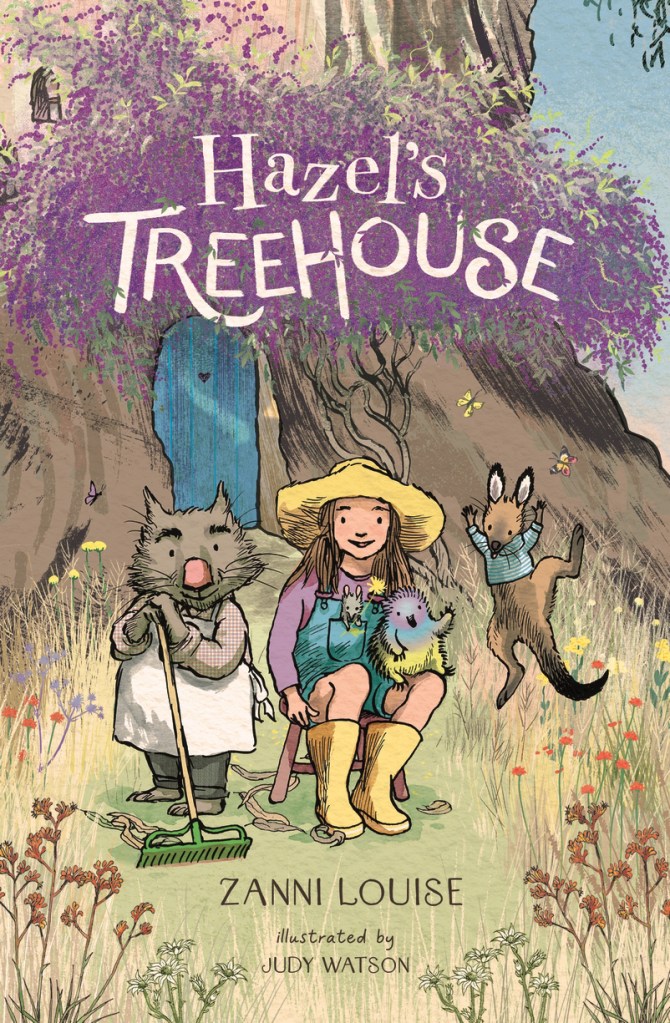
Hazel’s Treehouse is a new collection of gentle junior fiction stories from Walker Books Australia. It’s written by Zanni Louise, illustrated by me in dip pen and ink and it’s wrapped in flowers from its embossed hard cover and purple endpapers, through each of the ten stories to the creator biographies at the end.

Zanni’s a talented and prolific author across all age groups from the very young to YA, and she’s also an adept teacher. So I was delighted to be offered her stories to illustrate. You can check out her other books here if you haven’t already come across them.

Everyone except Odette is cloud gazing. Odette is bouncy so she’s rolling down a hill somewhere.

The book came out at the start of November amid an exuberance of spring flowers in our garden and local surrounds, because we’re lucky enough to live opposite a creek reserve and just down the road from a retired reservoir set in native bushland. I loved taking my advance copies of the book out for walks in the bush and photographing it against whatever was in bloom. There’s a floral sampling below, including some of the show-offs and some of the delicate species that people may overlook. In much of Australia, harsh weather, shallow topsoil and unreliable rainfall have combined to evolve plants that conserve energy with small blooms and avoid dehydration with sparse leaves. These plants are quietly beautiful and tough.

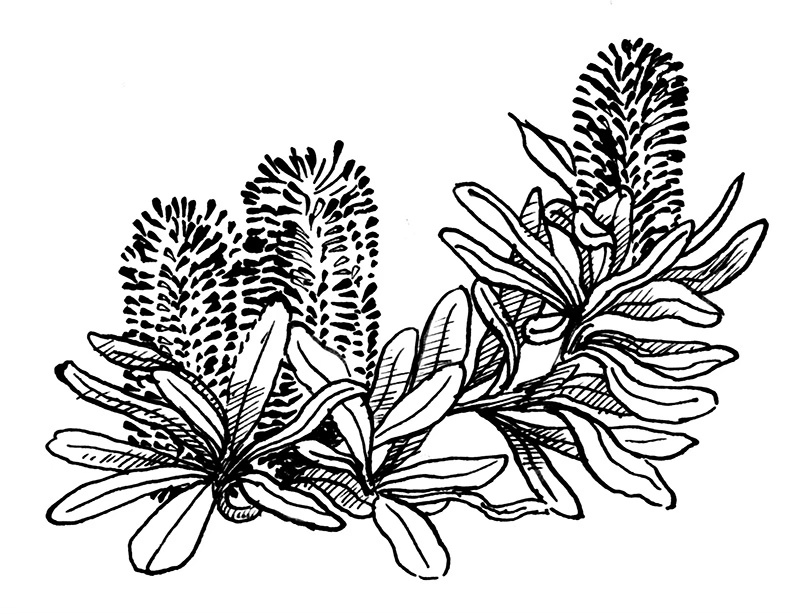
Zanni referred to several Australian flower species in her text, and because I had worked in nature conservation and had a horticultural husband brimming with indigenous plant nerdiness, it was an easy thing to embrace those references and run with them. I chose a plant to begin each story – whichever seemed the best fit (and that I felt capable of drawing!) Some of them were mentioned in the text and some were appropriate for other reasons. Christmas Orchids (Calanthe triplicata) adorned the Christmas story ‘A Very Tiny Day’. Coast Banksia (Banksia integrifolia) was used for ‘A Beach Day’ – even though the gang never made it to the beach. (You’ll have to read it to find out what they did instead, but they still managed to use their goggles and flippers.) Sometimes, if there was no obvious link, it was an opportunity for me to feature some of my personal favourites, like Hibbertia or Pimelea.

Christmas Orchids (Calanthe triplicata) for the Christmas story ‘A Very Tiny Day’
Walter demonstrates the correct method for cooking Christmas pudding. (Flour instead of flower here.)
Coast Banksia (Banksia integrifolia) for ’A Beach Day’
Tiny demonstrates the correct fit for goggles in ‘A Beach Day’. (Shown with some wet looking Wallaby Grass)

When I first noticed the plant references in the text, I was looking for clues to the location. The setting for any story is also a major ‘character’ in the story, creating an atmosphere, a flavour, and the physical framework into which our reader can immerse themself. So it’s one of the first things that I’m feeling for when I’m reading a manuscript for the first time. I thought that Zanni might have chosen plants local to a particular area where she’d prefer to see her stories illustrated. But the plants she mentioned are found all over Australia, and in some cases nowhere near each other. This told me that my setting was an imaginary location in a magical Australia, so… no rules! But for the most part, I’ve illustrated this imaginary place as a Grassy Woodland.

The NSW Office of Environment and Heritage describes Hazel’s surroundings to a tee: The Grassy Woodlands are a widespread and quintessential feature of rural Australia. Dominated by eucalypts, typically boxes and red gums, grassy woodlands have a relatively open canopy with sparsely distributed shrubs and a conspicuous and diverse ground cover of tussock grasses and herbs. Ephemeral grasses and herbs appear from seed banks following rain, while ground orchids and lilies emerge after fires to produce a spectacular floral display. 

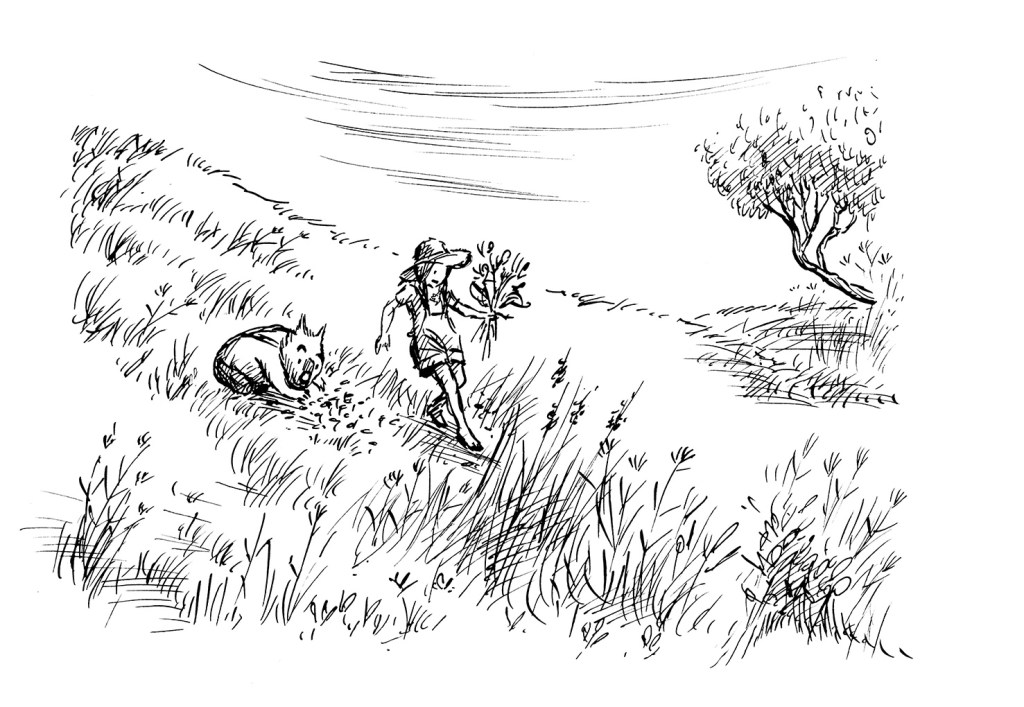
Walter, Hazel and Tiny (very small!) collect flowers in ‘Someone’s Special Day’

Hazel’s Treehouse has already been met with a flowering of warmth and enthusiasm from readers and reviewers. There’s much more to share about the process of illustrating it, but it seemed right to mention the flowers before the close of the last day of spring!

Oh, and here’s 54 seconds of baby Eastern Rosellas in the nest box in our garden, looking exactly like muppets.