Tag Archives: art challenge

Mini Masterpieces

Rachel — collage on vintage book board available to buy until 28 Nov 2025

Hello gentle readers. It’s been a while. I’ve just finished a book project, (more on that later) and I’m at the clearing up stage. Putting things to rights in the studio, starting to clear up the house, dipping my toe joyfully into the waters of recreational sewing.

I thought I’d reach out to make sure you’re aware of the IBBY fundraising auction that finishes tomorrow. You can browse all of the items for sale, here. They have been donated by Australian illustrators including me. If you’d like to contribute to this worthy cause, you will need to register to bid, (which is easy), and then go for it! Bidding closes tomorrow 28 November, at 9:00pm AEDT so you don’t have much time.

At the bottom of this post I’ve pasted in a little bit of information about IBBY, so that you can understand why IBBY might be on my radar. They’re all about young people, books for young people and supporting the creators of those books as well. But first, here’s a little background story about these rather unusual artworks.

Anyone who has been following this blog since the very beginning will know that when I started it, I was discovering the joys of altered book art. I was visiting used book fairs, collecting old books, some to read and some to cut up or draw in. After a few years, it seemed to me that altered book art was everywhere; everyone was doing it, and so it interested me less. The simple fact of a drawing being on a book page was not in itself interesting to me any more, although it had been a wonderful breakthrough for me when I was trying to find a medium, style and colour palette for Thunderstorm Dancing. (If you’re curious, go here.)

I still loved the subtle ways in which a drawing could respond to the text on the page, reinterpreting a few words, or taking an ironic look at the subject matter. And found poetry was and still is a delight to me. But I let it recede as my work went in different directions.

Later, I found myself irresistibly attracted to the cloth-covered book boards from vintage hardbound books. I began using them as substrates for drawings and paintings.

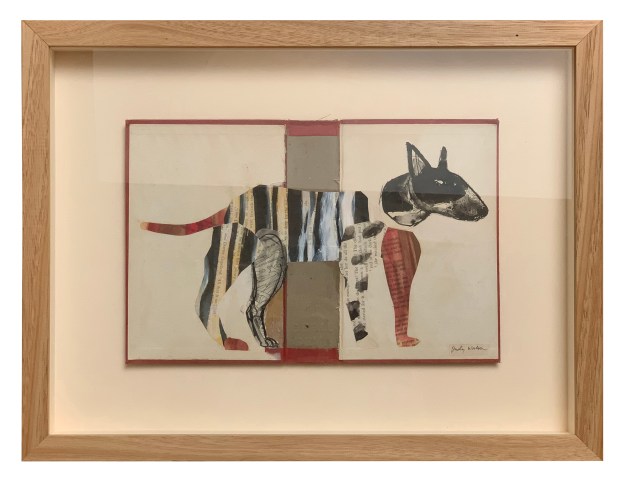
Collage has always been an important element in my work, both the paper and scissors kind, and the digital variety. In 2023, IBBY asked me to contribute a mini artwork for their Mini Masterpieces fundraiser and book boards were more or less the right scale. Some playful collages emerged. Below you see Mike, Maxine, Jennifer and Alan. They became my first Party Animals — characters who seemed so alive to me that they virtually wrote their own stories. If you’d like to read their accompanying microfiction stories I now have my Party Animals collected together on their own Instagram page https://www.instagram.com/judywatsoncollage/ and I’ll also add a page for them on this site in the coming weeks. As I make new Party Animals from time to time, they’ll be made available for sale there.

But now to the 2025 IBBY Party Animals!

Rachel and Trent

Trent — collage on vintage book board available to buy until 28 Nov 2025
Rachel — collage on vintage book board available to buy until 28 Nov 2025

These two followed their own stars. They look a little different from the 2023 partiers, but this time, they have been wrapped for travel with their own stories enclosed, so that you will know a little bit about them. I recently purchased a 1970s vintage typewriter, and I’ve been writing poetry on it, but I felt I wasn’t quite up to the challenge of typing their stories to the correct size and without a plethora of errors. Instead, I carefully chose a suitable typeface and printed their stories on good paper.

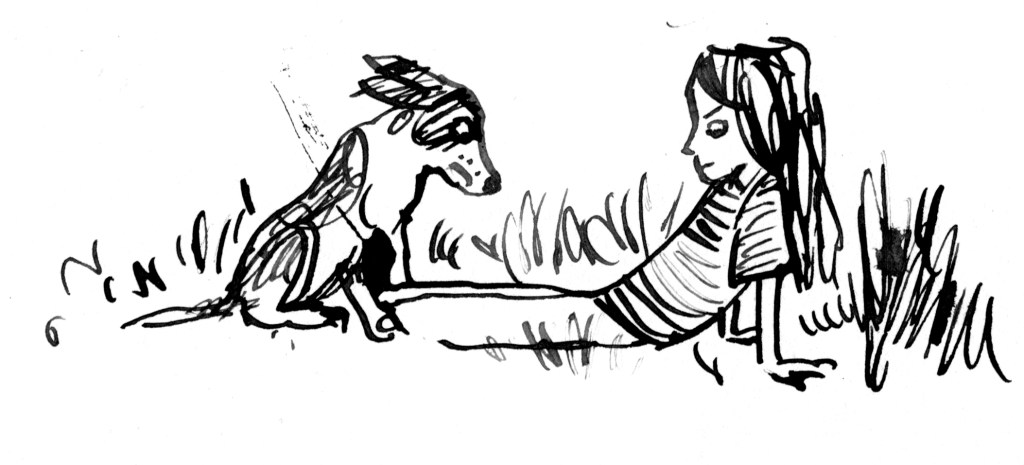
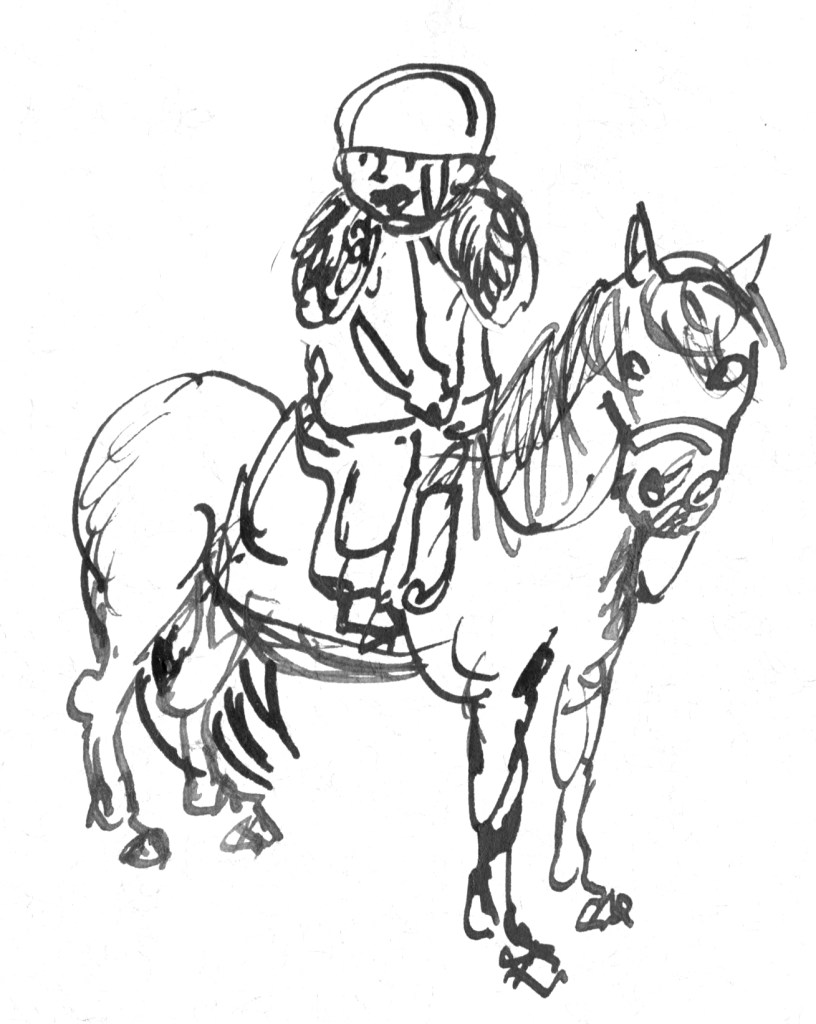
I also contributed three quick dip pen and ink sketches for the fundraiser. They’re based on reference photos of dogs and their owners that I took at a local pet day. You’ll see them here too. Below is the promised information about IBBY. If you’d like to support a wonderful organisation that supports children and the children’s literature community and if you’d like to purchase an original work of art from one of Australia’s book illustrators, then you can’t go wrong throwing in a bid for one of these artworks. Even if you don’t win the auction, you will bump up the price and help IBBY in the process. Good luck!

About IBBY Australia

IBBY Australia is one of 85 National sections of the International Board on Books for Young People (IBBY), and will be turning 60 in 2026.
IBBY is a non-profit organization which helps to build bridges to international understanding through children’s books. 
IBBY Australia submits authors and illustrators and their work for several IBBY administered international awards, including:
• the Hans Christian Andersen Award
• IBBY Honour Book List
• the Silent Books collection and
• the Outstanding Books for Young People with Disabilities list. 
You can read more about IBBY on this web site: https://www.ibby.org, and about IBBY Australia here: 
https://ibbyaustralia.wordpress.com
or join online here:
https://ibbyaustralia.wordpress.com/join-us/ – we welcome new members!

The Kick-About #125 ‘the Rorschach Test’ (part 3)

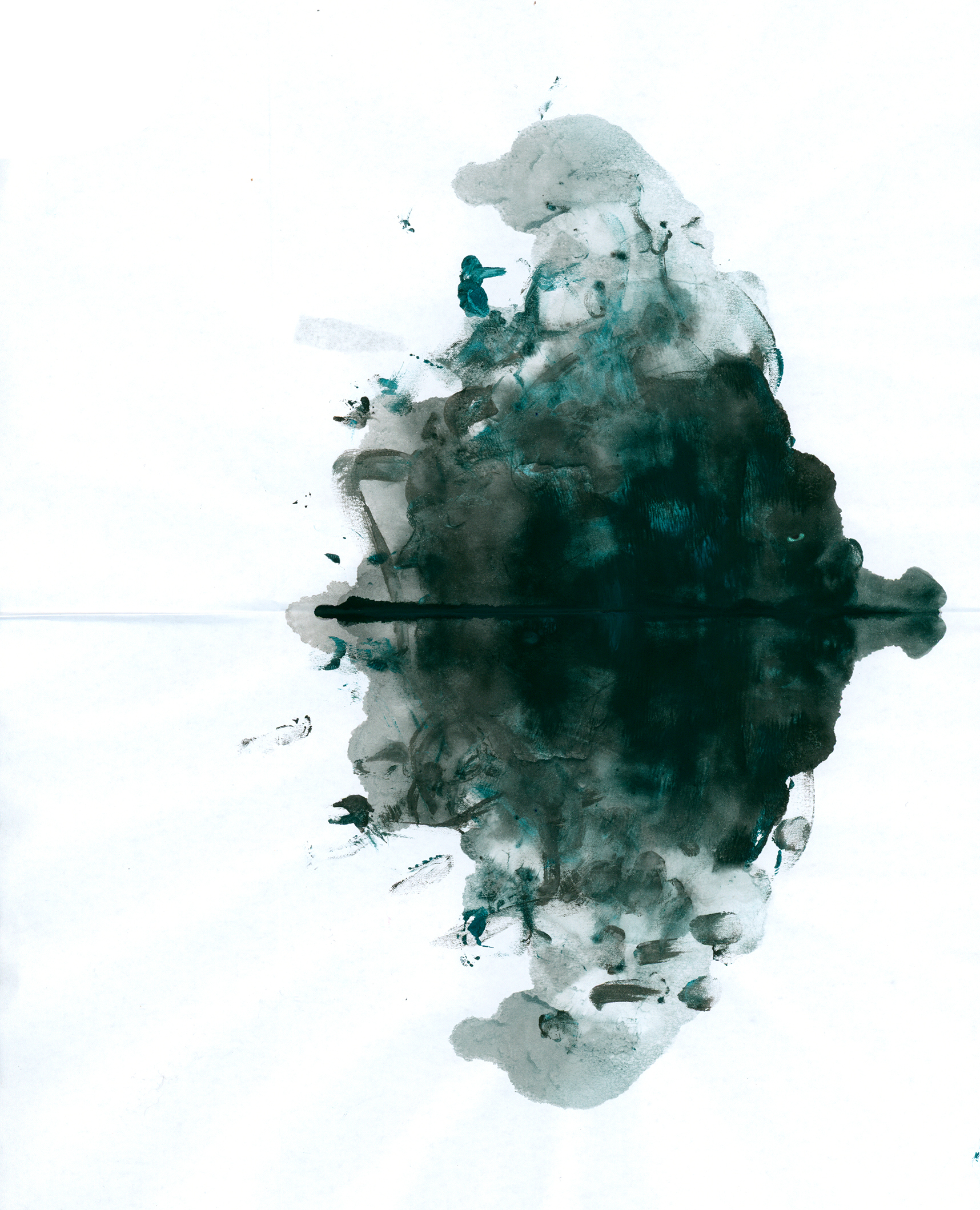
Hello again. Here is my last (I think) post in response to the Rorschach Test prompt from the Kick-About challenge hosted by Phil Gomm. This is my fully analogue response.

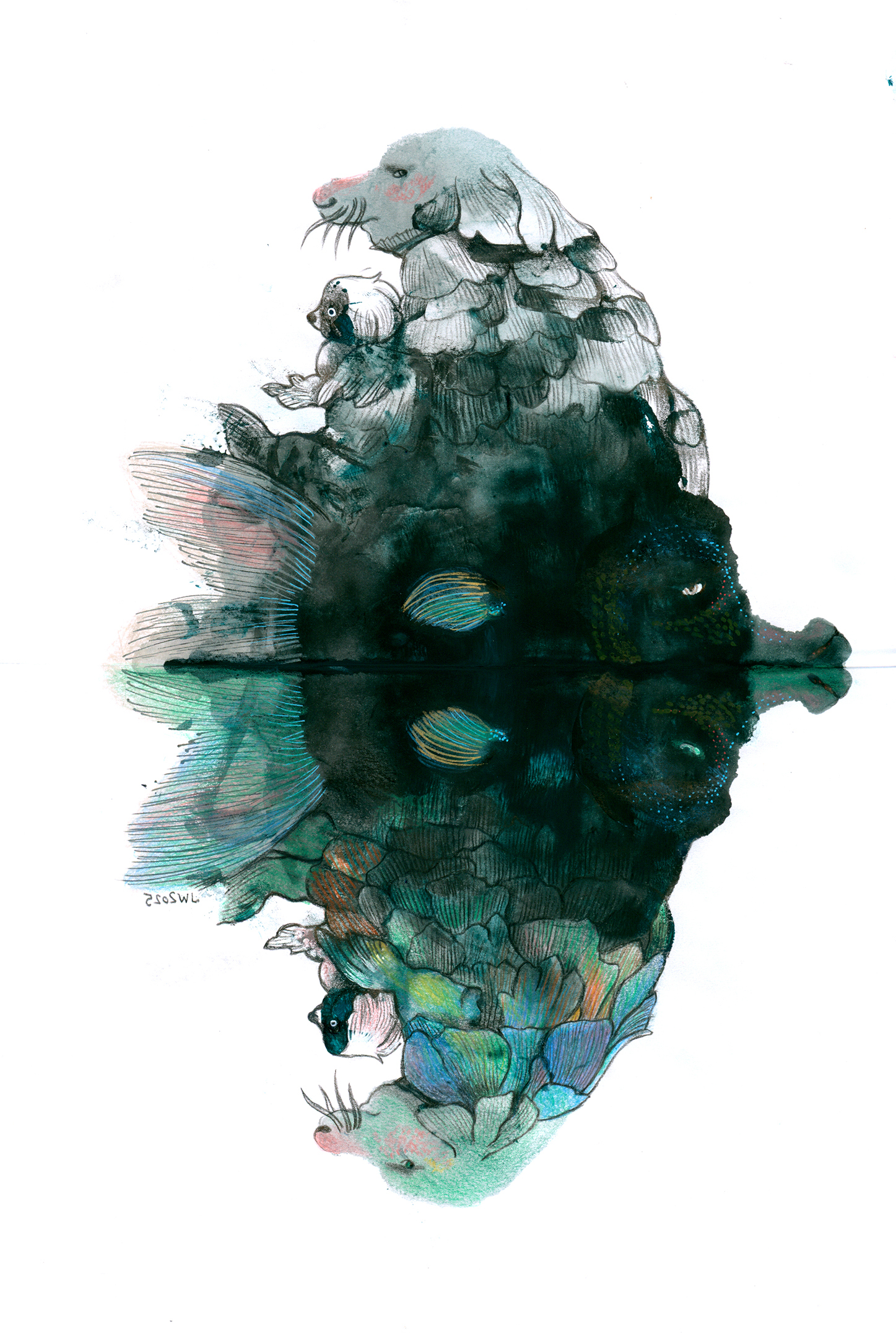
This inkblot looks EXACTLY like a lugubrious Long-nosed WhaleFish swimming across the surface of a lake carrying a weird, slightly menacing figure with a smaller figure on its lap.

It looks like that to you too, right?

So I tackled this one with Polychromos pencils and Posca pens. I really wanted it to be travelling left to right (English language picture book illustration is now in my bones), but when I was most of the way through, it looked better up the other way, mainly because of the colour in the water reflection.

I’ve refrained from ‘cleaning up’ the image in PhotoShop in order to remain true to its hand-made inkblottiness. All I did was dot a bit of white Posca pen to some of the more intrusively messy marks. So here it is.

Dogfish with Piebald Child riding a Long-nosed WhaleFish who is Really a Prince Under an Enchantment. If you want to rescue the prince, you’ll probably have to climb a mountain, wearing slippers made of prickly pears, and retrieve a plum from a magic tree that only fruits once every 50 years. Then come back and feed it to the fish… or something. I wish you luck. There’s no guarantee that he’ll be a nice prince when he is human again, so you’d better be on your toes, if you haven’t lost them to frostbite.

Below I’ve flipped the image so that you can compare it with the original ink blot.

The Kick-About #111 ‘The Mad Potter Of Biloxi’

I’m late to this Kick-about, because I’ve just arrived home in my studio after a month away. But I thought I’d throw together a quick response to the Kick-About #111, especially as it’s such a cool number.

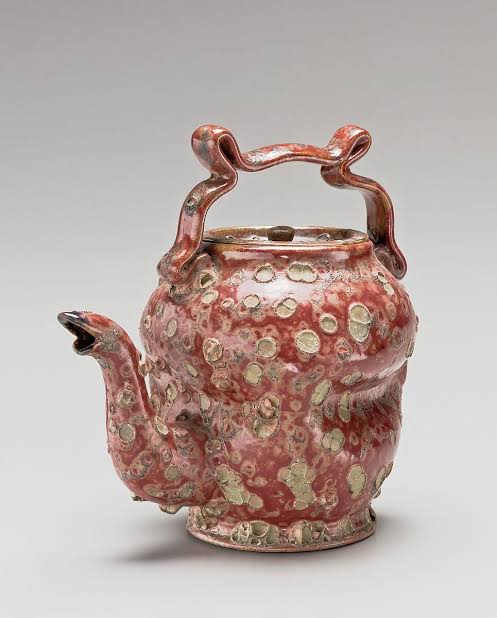
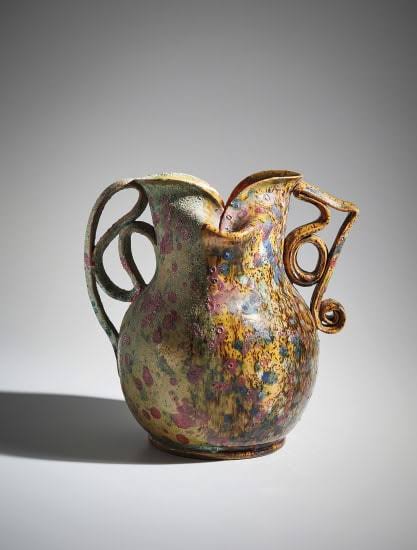
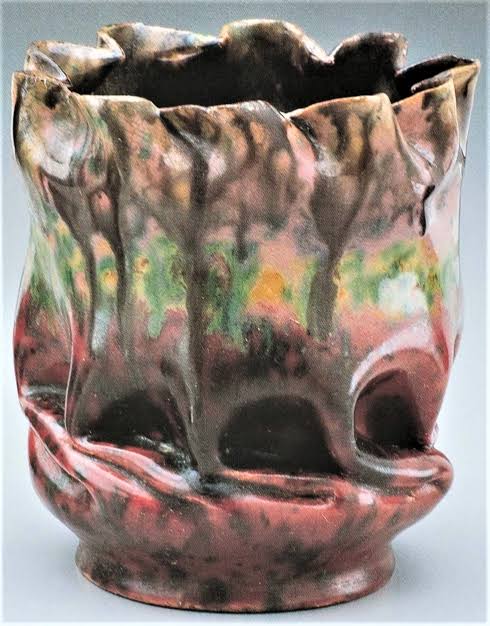
The prompt was the Mad Potter of Biloxi, a nickname for George E. Ohr, a most excellent American ceramicist who lived from 1857-1918. His wonderful glazes and crumpled shapes, along with the seemingly weightless and wandering curlicues he attached to some of his pots, are deliciously attractive. (So was his moustache.)

It’s very sneaky to kick-about after the other players have left the field, because I was able to take inspiration from their work before I began. You can see their fabulous stuff here. I drooled over everything first, and then I settled on Kerfe Roig’s studies with a glimmering eye. (Insert insane, evil laughter here.) I had only a couple of hours to do something with this, and although Kerfe had spent time, thought and energy exploring a range of processes to stunning effect, I brazenly ripped off a fast and cheap imitation in my own style. Sorry, Kerfe. Love your stuff.

Apologies also to George, because your colour harmonies are superb and I have gone OTT without any attempt at subtlety. But George, you’re dead, and anyway I think you wouldn’t care.

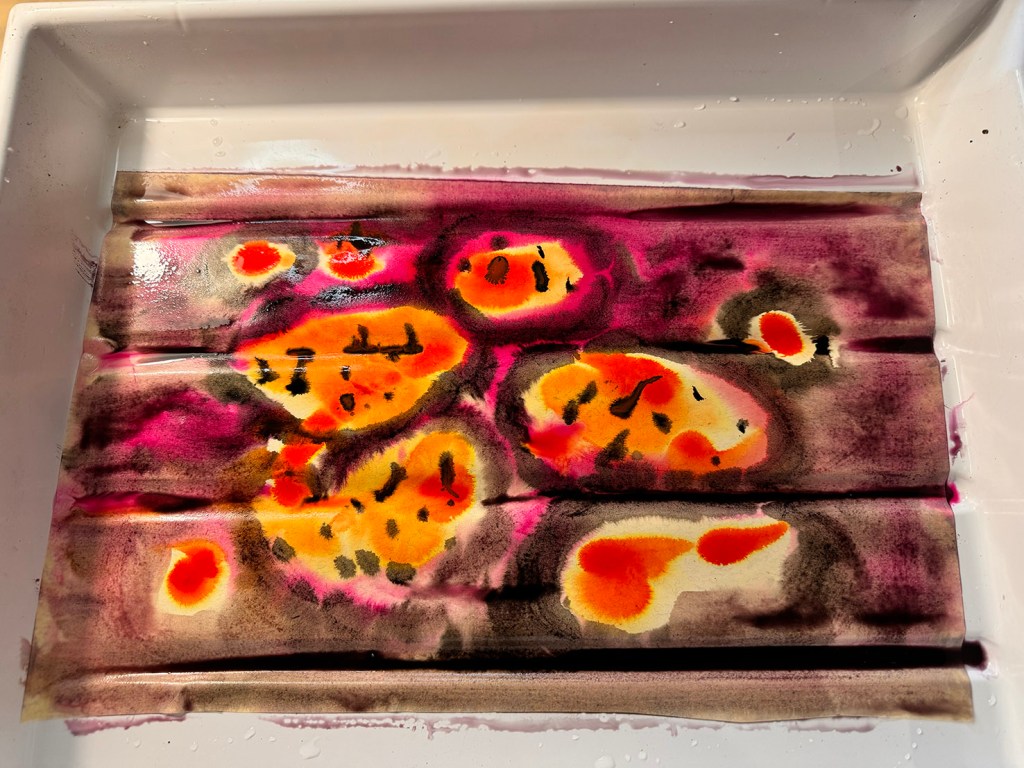
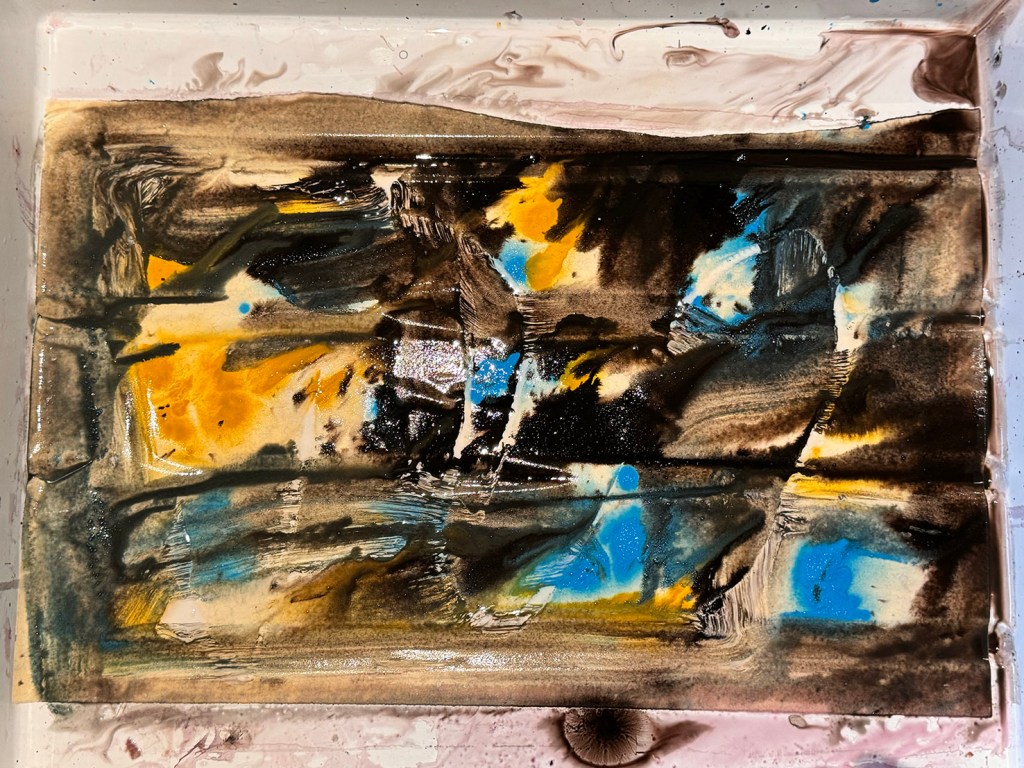
Step 1. Clamber about in the ‘catacombs’ under our house and locate one of the much used and highly versatile x-ray development trays my Dad used in his veterinary clinic.

Step 2. Place paper in the X-ray tray. In the absence of the mysteriously missing water sprayer, (What have you guys done with this since I went away?) douse some paper with water from a watering can, until fully soaked but not disintegrating.

Step 3. Pour excess water back into the watering can using the handy spout at the corner of the x-ray tray. (Thanks Dad)

Step 4. Apply inks with abandon.

Step 5. Apply random brushes with abandon.

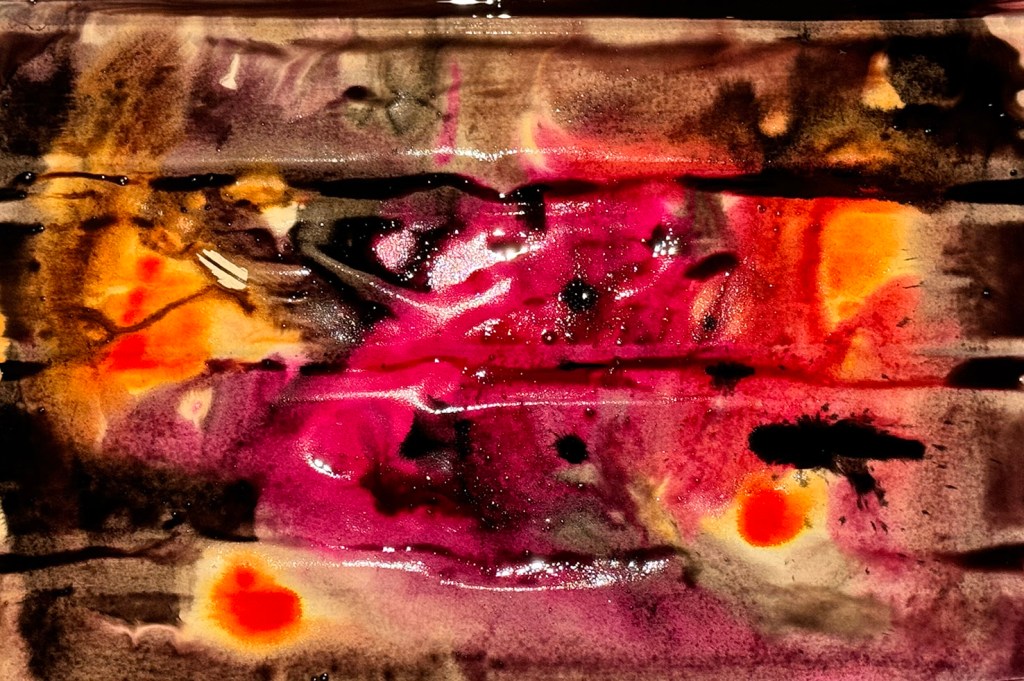
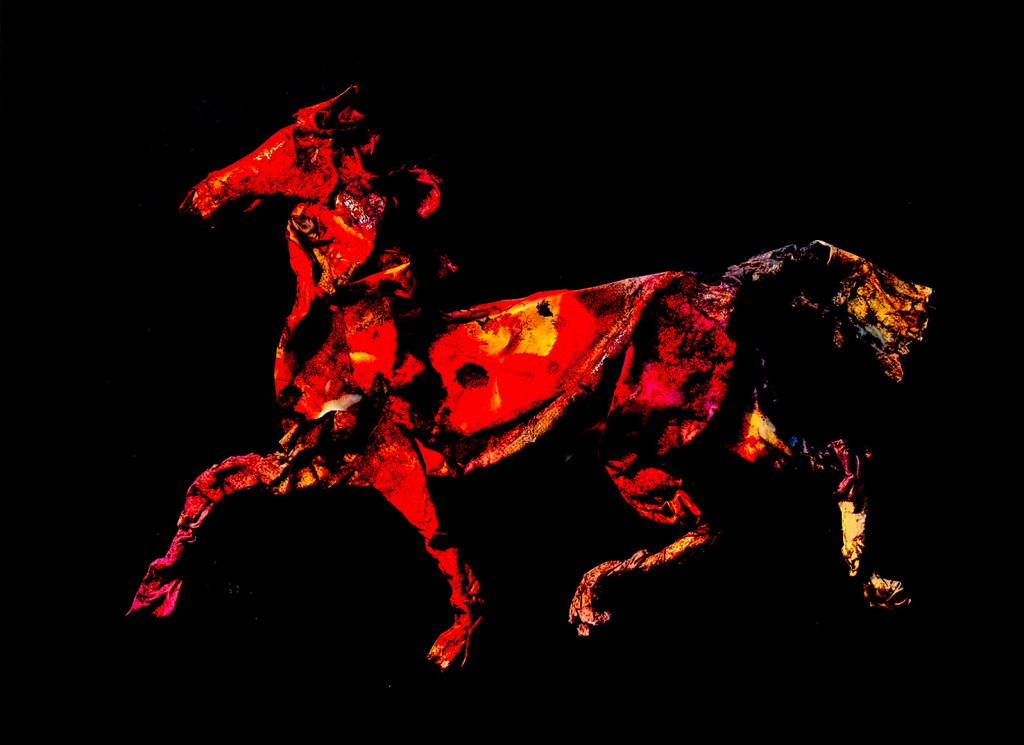
Step 6. Fashion paper into a horse shape, Ohr/Roig style.

Step 7. Ponder the delicate nature of wet paper, the already chaotic state of my workspace and the advantages and disadvantages of adding glue to the mix.

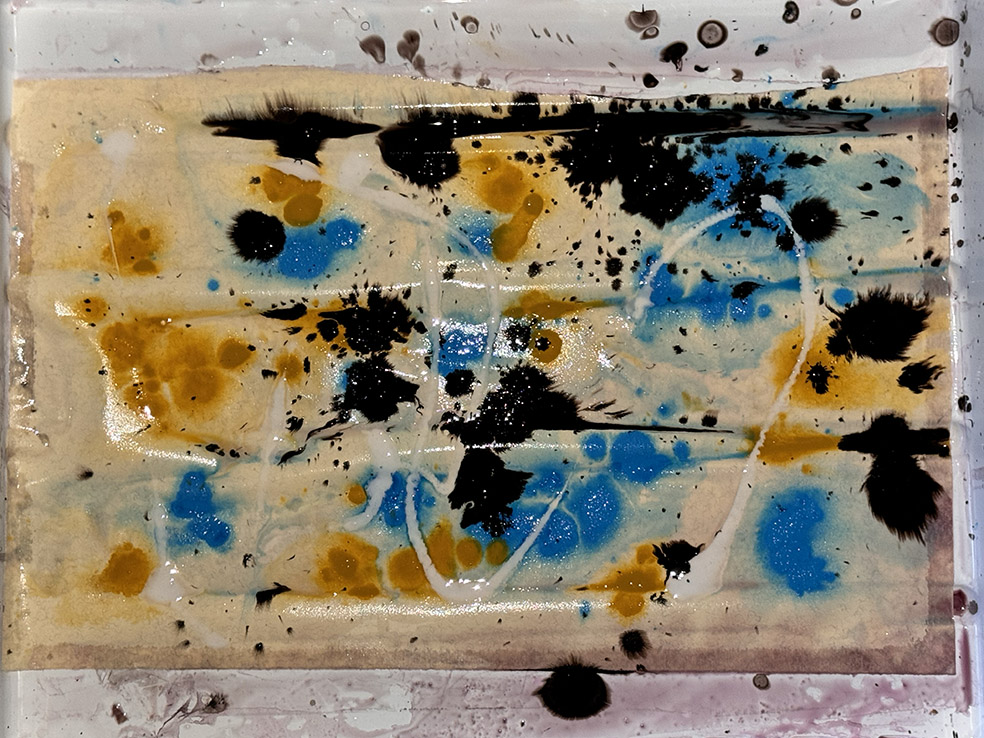
Step 8. Have another go, adding glue.

Step 9. Photograph and adjust levels / colours in PhotoShop.

Step 10. Cook zucchini slice

Kick-About #57 Mervyn Peake

The prompt for the 57th Kick-About is the drawings of painter, illustrator, author, poet and war artist, Mervyn Peake.

Peake was the author and illustrator of the Gormenghast series which has taken on cult status since the publication of the first book Titus Groan in 1946. But for some it’s too dark, daunting. It’s usually classified as a fantasy, but it contains no magic other than the magic of Peake’s imagination.

Peake was also a war artist. He was one of the first civilians to enter the German concentration camp at Belsen in 1945, an experience that had a profound effect upon him. His work was sometimes dark and grotesque. Other times his drawings expressed delicacy and softness, but they always emitted an intensity of personality and his use of light and shadow lifted even the prettiest of subjects far above anything that might be labeled saccharine. And then there are his drawings for his children. I have a copy of The Sunday Books, a collection of spontaneous creations he made on demand for his two small sons. In these, the images are flawed in the most lovely way. They are simply what flowed from his pen in the moment, with no polish, no corrections.

While thinking about Peake, I’ve been thinking about ’caricatures’. I’m not a fan of caricatures. Years ago, when a friend introduced me to someone who had no understanding of book illustration, the person said something along the lines of ’Oh you do caricatures! They are so clever!’ I confess I was horrified to be thought of as a caricaturist. (There’s something weird and fragile going on there, but we’ll leave that for now.) Some of Peake’s book illustrations are precariously close to caricatures if a caricature is something that depicts a person in a grotesque way by exaggerating their features. And yet the sophistication and delicacy of the rendering is undeniable.
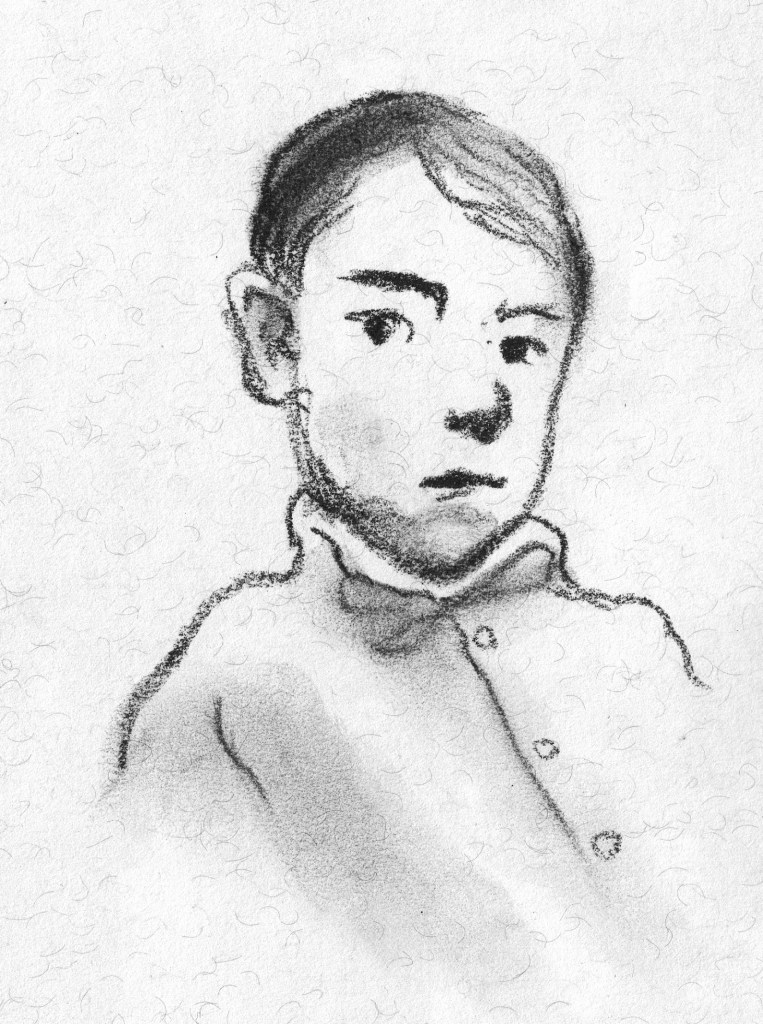
illustration by Mervyn Peake

And what is the purpose of illustration? It’s not to depict the banal reality of what we can see every day with our own eyes. It’s about expressing a feeling, a mood, an atmosphere. Or sparking a feeling or mood in the reader. And so it follows that a certain amount of well considered exaggeration goes with the territory.

There’s much to explore in response to Peake’s work, and I don’t think I can do it on one hit, so let us see where it takes me. But to begin with, it has taken me back to two mediums I loved in earlier years but have neglected more recently.

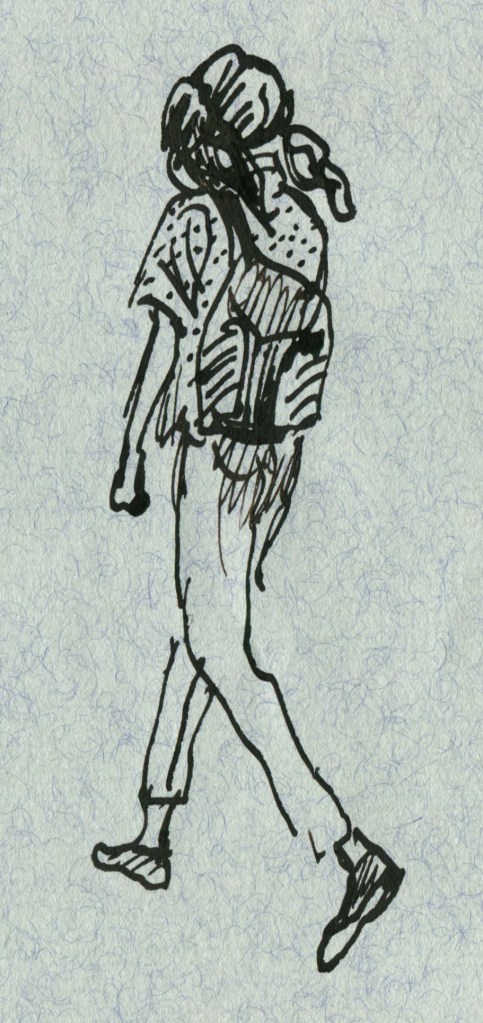
Pen and ink. Obviously this is all about the line. But it’s also about embracing a medium that can’t or won’t be fully controlled. I worked pretty small with these and just enjoyed making lots of small doodles. Perhaps some more finished work will come later.

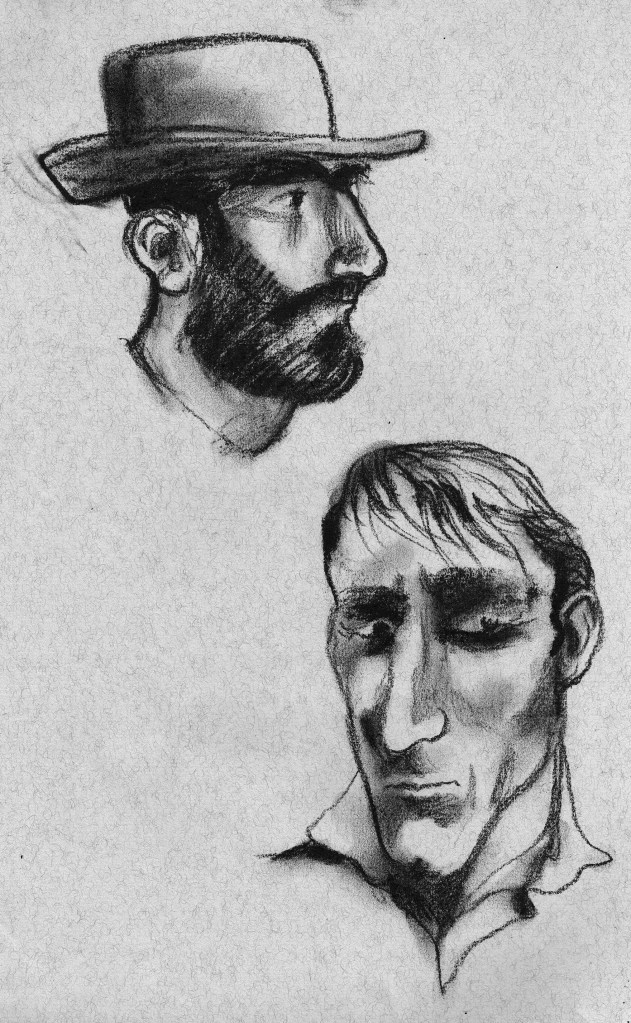
And charcoal or soft pastel. This is less about the line and more about the tone, but really it’s a delicate balance of both. And there’s an element of mystery that comes from the smudgy indistinctness. It feeds the imagination. I haven’t found my mojo again with this quite yet, but I have been enjoying the start of the journey.

These two are a bit obvious.
I like this little guy.

Lastly, I did a couple of tiny wash drawings with a touch of pencil detail.

My daughter Remi at a fancy dress party a few years back.
My son Hugo listening to music in my studio the other day.
Another of Hugo.

Thanks again, Phil. It has been fun to provide the prompt this time around! x

Kick-About #38 Algae

I don’t know why I love this crab so much.

The prompt for the 38th Kick-About is one of Matisse’s lovely cut-outs, titled White Alga on Orange and Red Background. I’m a big fan of drawing with scissors as Matisse described it. But I didn’t pick up the scissors. For one thing, the bees kept swarming! Three more times. I mean, crikey! We have managed to capture each of the swarms. (Today I noticed that the neighbour‘s bees are swarming. I‘m letting that lot go.)

We now have not one hive, but four. The smallest swarm was successfully reunited with the original hive. I have learned so much in a fortnight! Because I absolutely can’t help myself, I have begun the process of naming the four hives after fictional places. (Scott argues in favour of One, Two, Three and Four. *sigh*)

The original hive is three boxes high, was neglected for the last few years, and became overpopulated. It’s no longer neglected or overpopulated, but it’s still tall. It is going to be either Gormenghast, or AnkhMorpork. Both are very appealing, so we will continue thinking about that.

The smallest new hive is called Dagobah. It’s getting supplementary feeding with sugar syrup. Some of those bees fell in the stormwater drain while we were bringing them down from an overhanging branch. I fished them out of the water with a net but things didn’t look good for the piles of cold, soggy bees on the ground and dark was falling, with rain forecast. (Told you we have been learning…) However, the next day when the sun reached them, they began to recover and almost all of them rose up in reincarnated glory and returned to the colony. After this swampy experience, the name seemed obvious. (There are several Star Wars fanatics in this household.)

The original swarm from my previous post is a Thing of Glory! It is buzzing and growing and brimming with pollen and nectar. Cells are filling with larvae as new bees are created. Hugo has named this hive Sanctaphrax. Perhaps he feels this new hive will be a home of intellectual pursuit and heroic deeds. At any rate, it’s a great opportunity to honour his favourite book series.

This only leaves one hive unnamed. It is middle sized and thriving. It has had a lucky beginning, in that we donated brood from the old city to help them build their new colony. I could name it Serendipity, but it has to be a fictional place. So we will think some more on that one.

Once again, I am talking more about bees than art! What is going on?

This is an accurate reflection of my world just at present, but it’s probably time to mention that as soon I saw the prompt for the Kick-About I thought of seaweed, (not bees) and in particular I thought of the seaweed I painted for When You’re Older by Sofie Laguna; the book I have just finished illustrating.

There are several pages featuring the sea in this book, and in three of them I took the opportunity to create underwater scenes full of colourful seaweed. So when I was working on ideas for the endpapers, one of them featured crabs and seaweed. I never finished this concept, because it didn’t seem as apt as some of the other ideas, but after spending a whole day painting tiny crabs, and working them into patterns, I did fall in love with the little guy at the top of this post, hiding behind his seaweed. He totally captured my heart. I made a few more little arrangements of crabs, but I wasn’t sure they worked as well when reduced in size.

Crabs. Are you confused? We’re on crabs now. Keep up!

Today I revisited the unfinished endpapers and played around a little bit more. They’re probably nicer on white, but hey.

And here are some small sections of this non-endpaper creation.

Thanks, Phil Gomm, for hosting the Kick-About. (I’m late again!)

Kick-About #37 plus Bees!

The prompt for the 37th Kick-About could hardly have been more suited to me and my natural inclinations. It’s inky and leafy and Australian. It’s Peter Mungkuri’s Punu Ngura (2019)

Punu Nura (Country with trees) © Peter Mungkuri, Iwantja Arts. 2019.

From the Yankunytjatjara, Southern Desert region comes this beautiful black and white ink drawing on paper by Peter Mungkuri. I’m glad this prompt was chosen because it has introduced me to Mungkuri’s work, which is perfectly balanced, sumptuously decorative and calmly natural all at the same time. It is well worth a visit to the Art Gallery of NSW website to see a collection of his work. Swoon!

What strikes me most is the combination of the loosest of ink splatters with far more careful and detailed patterning. I was going to explore some inkiness yesterday (Yep! Last minute again!) to see where an observation of Mungkuri’s work might take me, especially with regard to the use of white ink patterning over the top of the looser ink layers. But before I could begin something happened.

Our bees swarmed.

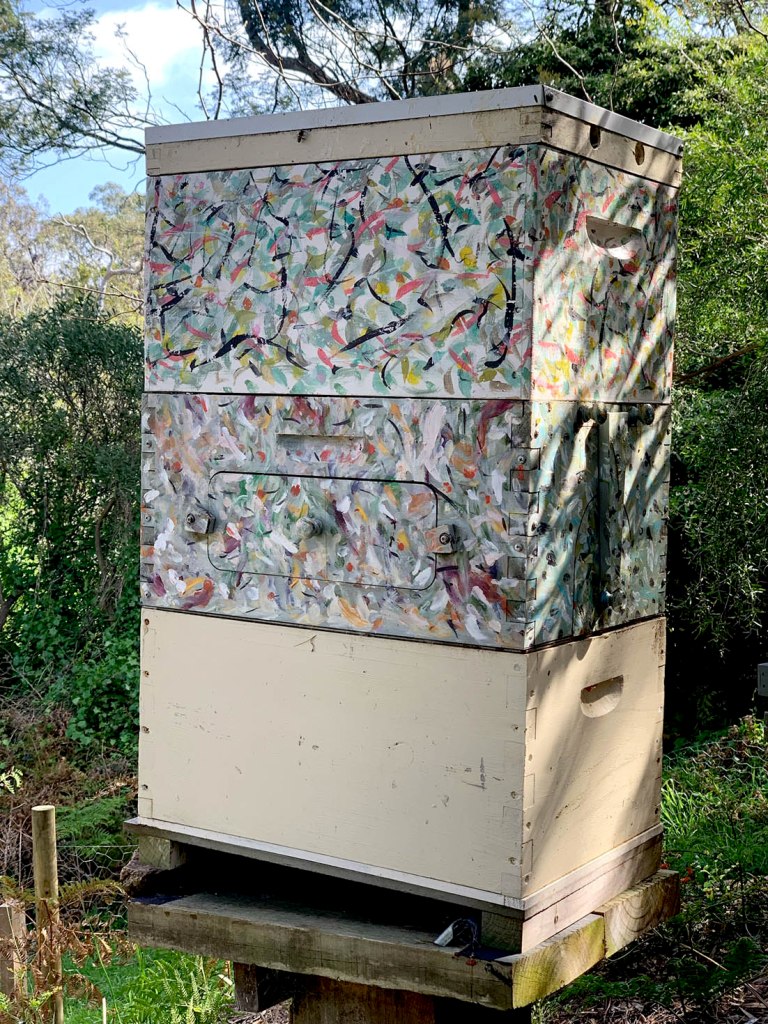
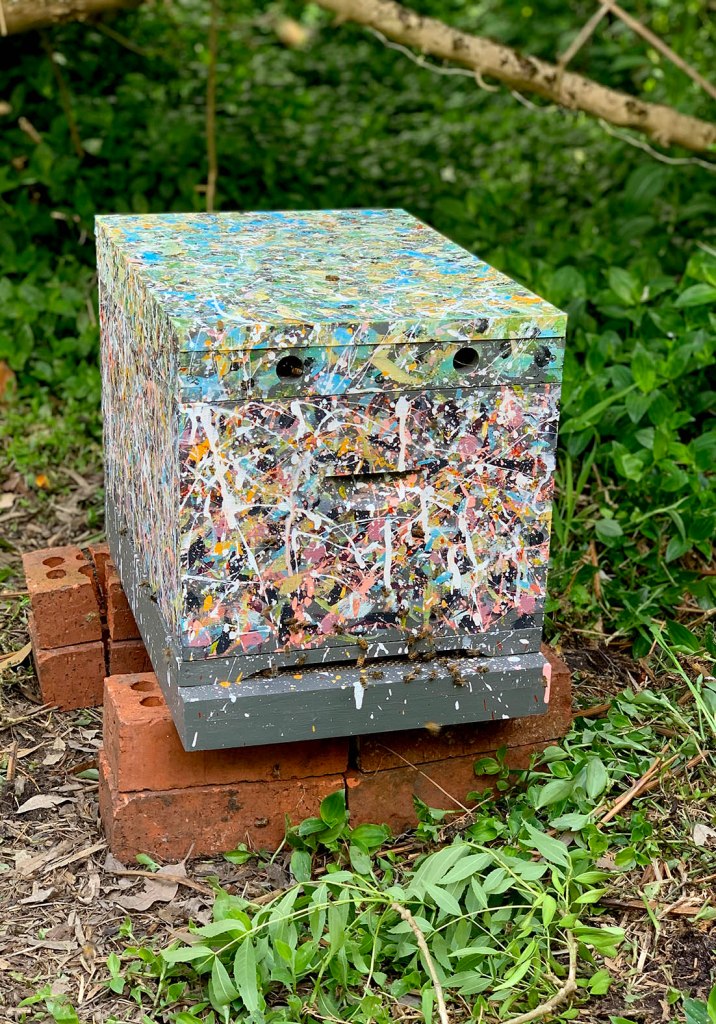
This happened last year and we weren’t prepared. The hive became overcrowded, and half the bees took off to find roomier accommodation. This time, we had not only added an extra box to our existing hive to give them extra space, but we had prepared a separate hive in case they swarmed, and had it ready for the new colony to use. Well, not perfectly ready. The frames were in, with wax and wire for the bees to build on. But I wasn’t completely finished with my exterior paint job.

This is the old hive with a new box added on top. But this colony is thriving and they needed more space than this.
New hive, unfinished. Artist dissatisfied.

This is our new hive in the middle of my paint assault a couple of weeks ago. I had to stop when the paint was so thickly applied that it needed a few hours to dry before I could apply anything more with a brush. Alas, other tasks have called me since then. I hadn’t yet reached a satisfactory conclusion when the bees swarmed.

I should be annoyed. Pesky bees. They sent me no email, no letter and didn’t phone to say they were leaving that day. Just… buzzed off.

But I’m not annoyed. Far from it. My spring day with the bees was uplifting, empowering, mindful and full of joy. So I’m ok with the paint job. In fact, we have installed the bees in the brood box only, so I can tweak the top box before we put it in position. The roof and base are harder to alter… but who knows what might be stealthily achieved at night with a daylight bulb…

So here is what happened in pictures (and just a few words).

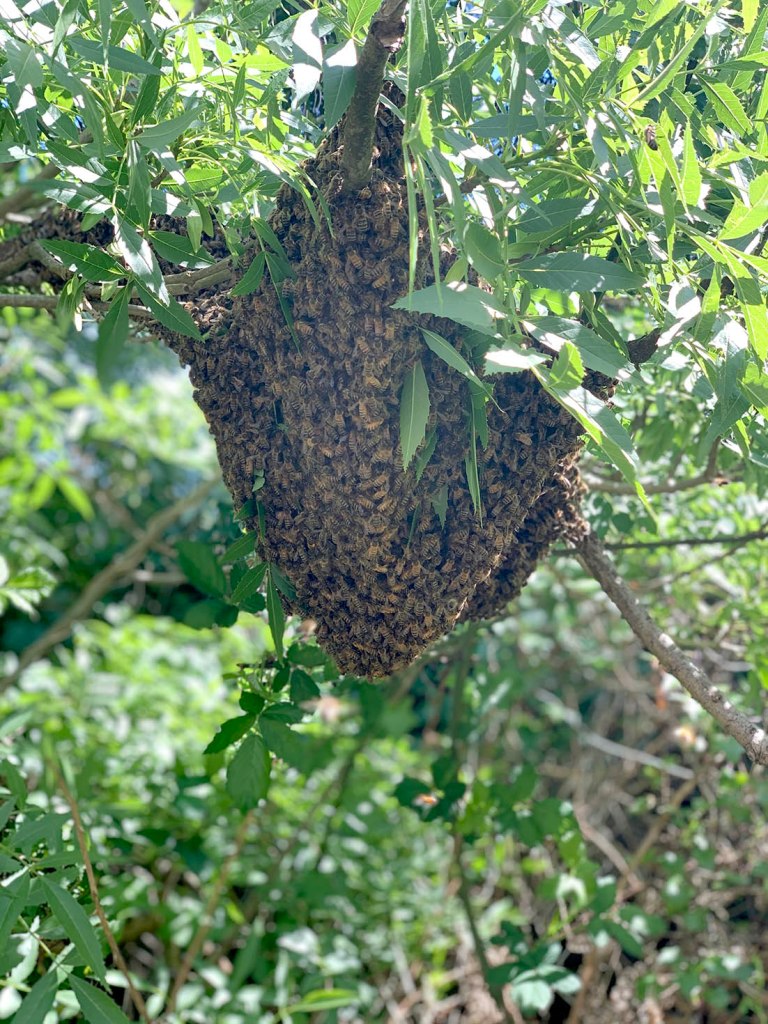
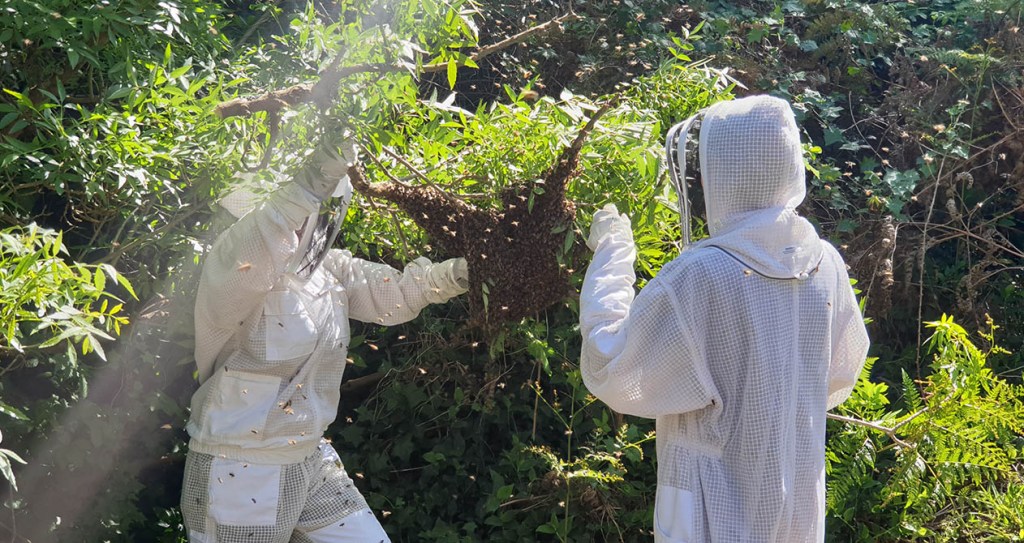
We were lucky with the location the bees chose to hang out. They congregated in the empty block next door, just by a storm water outlet, hanging from a conjunction of branches in a Desert Ash. It might have been over the storm water drain. It might have been up too high to reach without a ladder. But they chose a spot just reachable from the ground and just far enough away from the concrete drain that we didn’t risk falling into it. Phew! (I could have done without the blackberry canes though.)

First we suited up. Hugo, sorry about the shut-eye photo. It was you or me. (Blogger’s prerogative.)
Then I sawed through the main branch in order to lift the swarm down to the box. It was a bit tricky because there were several branches tangled together and the bees were dangling lower with every jiggle. The blackberries bit me. They have no respect for bee suits.
We gave the branch a firm shake and most of the bees dropped into the box.
Hugo and I then gently scooped as many bees as we could up and dropped them into the box. Hugo worked out where the queen bees was (inside) and we gently placed the lid on the box, whilst blowing bees out of harm’s way in an undignified manner.
With the tricky part over, we decided to sit in the sunshine (on the handy concrete drain) to watch the bees for a while. Some of the bees were fanning their wings near the entrance on the right. We guessed the queen was on the inside near that point and we were hopeful that all was well.

After this we stepped away and shook the bees off our suits. But then I had to go back to have another look. Just because.

This is what it looked like straight afterwards. The bees were slowly moving towards the entrance and going into the box.
A couple of hours later, almost all were inside the box. We moved them into their proper location beside the other hive after dark and all seems well today.

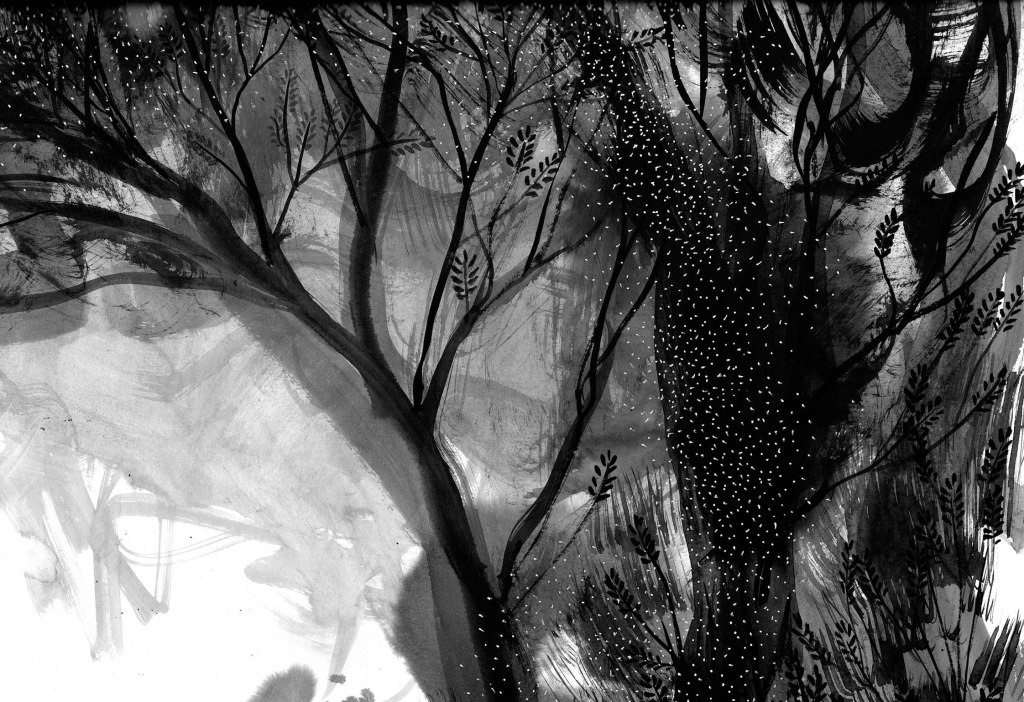
That evening, I had a bit of a go at my inky exploration of Peter Mungkuri’s plant drawings, but my mind was full of bees. And joy. So it became an illustration of Hugo and me, arms uplifted to the swarming bees.

In painting it, I was tumbling three things together: what happened last year (they swarmed and disappeared) what happened this year (they swarmed and we were in the middle of it) and what happens every year (we have a dead tree stump that disgorges thousands of tiny moths once a year and they spiral upwards into the sky in the early evening attracting a feeding frenzy of bird life. It is quite the annual spectacle.)

Finished painting. Scanned in 6 parts and assembled.

Thanks again, Phil Gomm, for hosting the Kick-About. Sorry I’m late!