Tag Archives: children’s books

Mini Masterpieces

Rachel — collage on vintage book board available to buy until 28 Nov 2025

Hello gentle readers. It’s been a while. I’ve just finished a book project, (more on that later) and I’m at the clearing up stage. Putting things to rights in the studio, starting to clear up the house, dipping my toe joyfully into the waters of recreational sewing.

I thought I’d reach out to make sure you’re aware of the IBBY fundraising auction that finishes tomorrow. You can browse all of the items for sale, here. They have been donated by Australian illustrators including me. If you’d like to contribute to this worthy cause, you will need to register to bid, (which is easy), and then go for it! Bidding closes tomorrow 28 November, at 9:00pm AEDT so you don’t have much time.

At the bottom of this post I’ve pasted in a little bit of information about IBBY, so that you can understand why IBBY might be on my radar. They’re all about young people, books for young people and supporting the creators of those books as well. But first, here’s a little background story about these rather unusual artworks.

Anyone who has been following this blog since the very beginning will know that when I started it, I was discovering the joys of altered book art. I was visiting used book fairs, collecting old books, some to read and some to cut up or draw in. After a few years, it seemed to me that altered book art was everywhere; everyone was doing it, and so it interested me less. The simple fact of a drawing being on a book page was not in itself interesting to me any more, although it had been a wonderful breakthrough for me when I was trying to find a medium, style and colour palette for Thunderstorm Dancing. (If you’re curious, go here.)

I still loved the subtle ways in which a drawing could respond to the text on the page, reinterpreting a few words, or taking an ironic look at the subject matter. And found poetry was and still is a delight to me. But I let it recede as my work went in different directions.

Later, I found myself irresistibly attracted to the cloth-covered book boards from vintage hardbound books. I began using them as substrates for drawings and paintings.

Collage has always been an important element in my work, both the paper and scissors kind, and the digital variety. In 2023, IBBY asked me to contribute a mini artwork for their Mini Masterpieces fundraiser and book boards were more or less the right scale. Some playful collages emerged. Below you see Mike, Maxine, Jennifer and Alan. They became my first Party Animals — characters who seemed so alive to me that they virtually wrote their own stories. If you’d like to read their accompanying microfiction stories I now have my Party Animals collected together on their own Instagram page https://www.instagram.com/judywatsoncollage/ and I’ll also add a page for them on this site in the coming weeks. As I make new Party Animals from time to time, they’ll be made available for sale there.

But now to the 2025 IBBY Party Animals!

Rachel and Trent

Trent — collage on vintage book board available to buy until 28 Nov 2025
Rachel — collage on vintage book board available to buy until 28 Nov 2025

These two followed their own stars. They look a little different from the 2023 partiers, but this time, they have been wrapped for travel with their own stories enclosed, so that you will know a little bit about them. I recently purchased a 1970s vintage typewriter, and I’ve been writing poetry on it, but I felt I wasn’t quite up to the challenge of typing their stories to the correct size and without a plethora of errors. Instead, I carefully chose a suitable typeface and printed their stories on good paper.

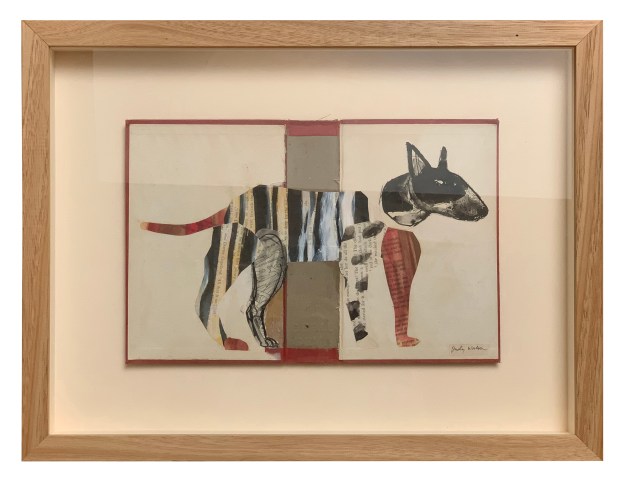
I also contributed three quick dip pen and ink sketches for the fundraiser. They’re based on reference photos of dogs and their owners that I took at a local pet day. You’ll see them here too. Below is the promised information about IBBY. If you’d like to support a wonderful organisation that supports children and the children’s literature community and if you’d like to purchase an original work of art from one of Australia’s book illustrators, then you can’t go wrong throwing in a bid for one of these artworks. Even if you don’t win the auction, you will bump up the price and help IBBY in the process. Good luck!

About IBBY Australia

IBBY Australia is one of 85 National sections of the International Board on Books for Young People (IBBY), and will be turning 60 in 2026.
IBBY is a non-profit organization which helps to build bridges to international understanding through children’s books. 
IBBY Australia submits authors and illustrators and their work for several IBBY administered international awards, including:
• the Hans Christian Andersen Award
• IBBY Honour Book List
• the Silent Books collection and
• the Outstanding Books for Young People with Disabilities list. 
You can read more about IBBY on this web site: https://www.ibby.org, and about IBBY Australia here: 
https://ibbyaustralia.wordpress.com
or join online here:
https://ibbyaustralia.wordpress.com/join-us/ – we welcome new members!
The Kick-About #125 ‘the Rorschach Test’ (part 1)

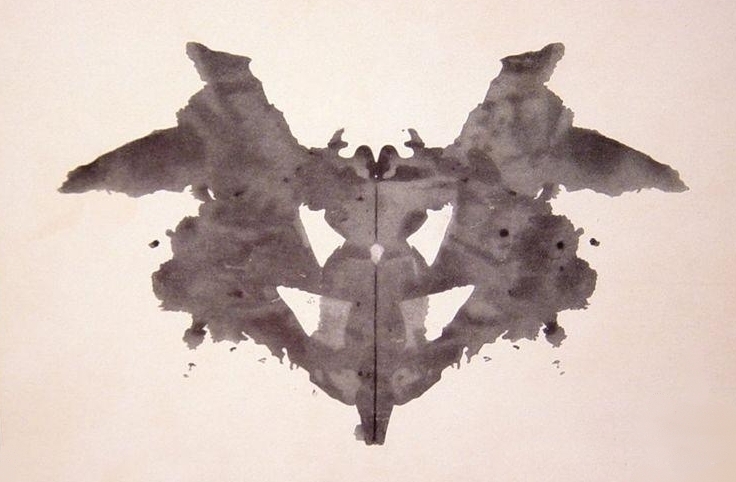
Most people are familiar with the Rorschach Test invented in 1921 by Hermann Rorschach. It‘s so often used as a gag in a cartoon or a sitcom that even youngsters get the general idea. It’s a psychological test, where a patient looks at the ink blot and describes what they see in it – often an animal, face or scene.

By Hermann Rorschach (died 1922)

But I wasn’t aware that Klecksography was a thing in the late 19th century. Making images from ink blots, it’s an activity that I often enjoy as a warm-up exercise for drawing, and to create new characters. I usually call it blob drawing, which isn’t nearly as fancy, but I suppose my blobs are a bit more blobby in shape than blotty, and they lack the symmetry too.

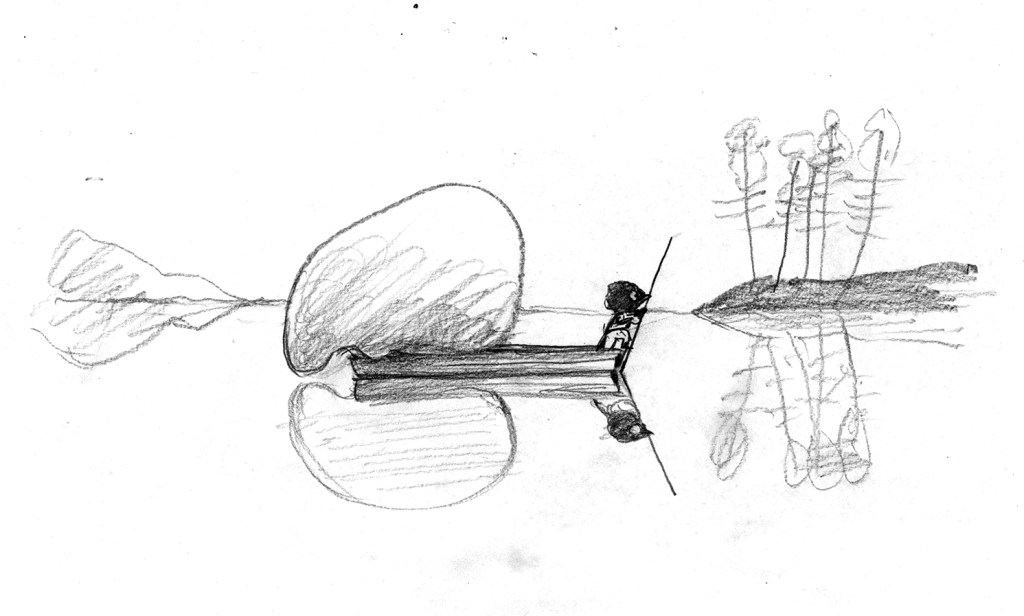
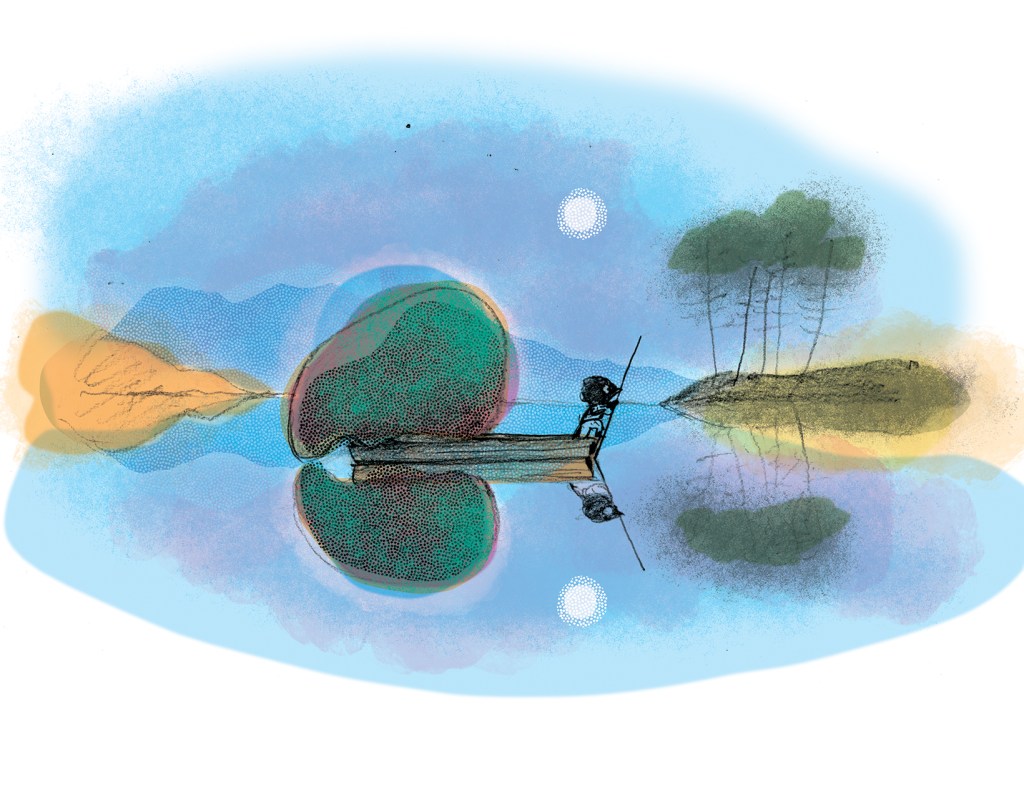
I thought this prompt was a great opportunity to join in the Kick-About again, because I already have some artwork to begin with, and it’s not my collection of blob drawings. It’s this illustration (below) from my upcoming picture book with Kyle Mewburn, Jo and the NO. In this illustration, Jo traverses ‘lakes as still as mirrors’. So creating background mountains and their reflections from Rorschach-style inkblots seemed like a good idea.

Here the NO in the back of the punt seems to be observing itself in the still waters because I wanted to suggest self reflection as well as the physical reflection of the scenery. You’d think it would be easy to whip up a few inkblots and plonk them into the image. But it was surprisingly hard to get from the successful rough illustration (below) to a successful final illustration.

The original sketch started as a thumbnail drawing, intended to share a double page spread with three other vignettes. But when we decided that the book was going to 40 pages this scene acquired a double page spread of its own with the impediment of the gutter down the middle of the illustration. So getting the balance of the illustration to work again in a different format was a challenge. The enlarged range of mountains and trees when loaded together on the page, very quickly distracted from and overwhelmed our protagonists, instead of highlighting them and giving significance to them.

Also I didn’t want my reflections to be perfect, because imperfect things are always more interesting and have more visual energy. But I found that if they were too interesting, they became distracting. So there was a lot of trial and error involved with recreating the transparent freshness of the rough sketch within a new framework.

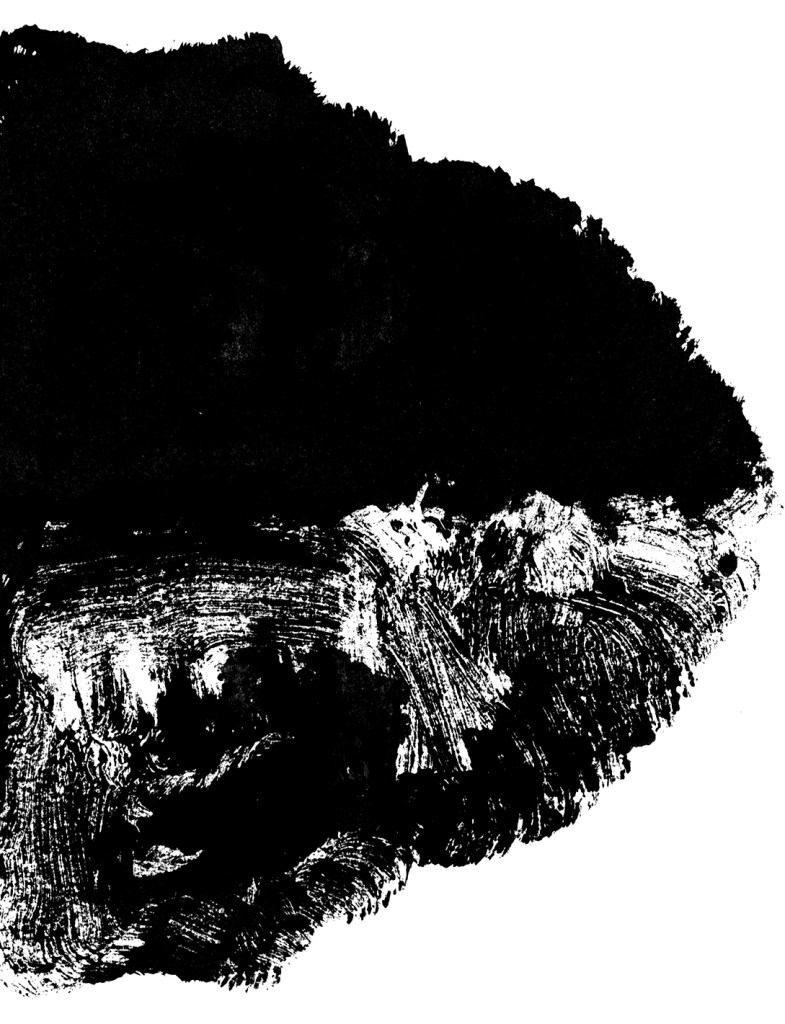
Below are a few of the monotypes I produced to create islands and mountains for the background. I painted a loose shape, suggestive of an island with vegetation, and then folded the paper in half for the reflection.

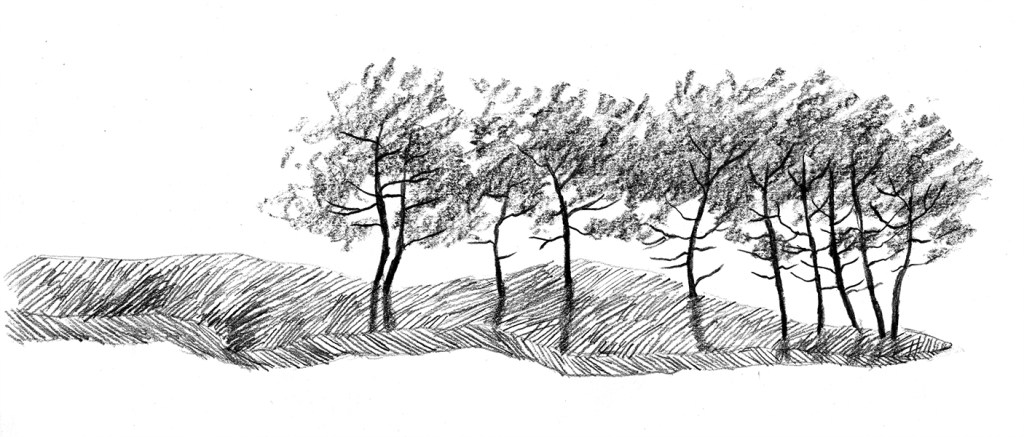
Below are some of the more detailed experiments, testing out graphite instead of paint. These fell into the too distracting category. There are always countless illustrations made for a picture book (some of them very time consuming) that don’t make the final cut. But they may be interesting in their own right.

And I have to include the other hand-made element – a little collage boat made from Ingres paper and soft pastels. It’s so nice and wonky. One of my favourite bits.

For the final art, I did end up using a digital reflection for some elements, and those reflections did become ‘perfect’. But most of the tree reflections were drawn by hand and so they don’t perfectly match their right-side-up counterparts. (This brings about a nice effect used by landscape architects, where a repeating pattern with small variations is pleasing but never monotonous.) Embracing these inconsistencies was part of my journey of letting go of hard rules.

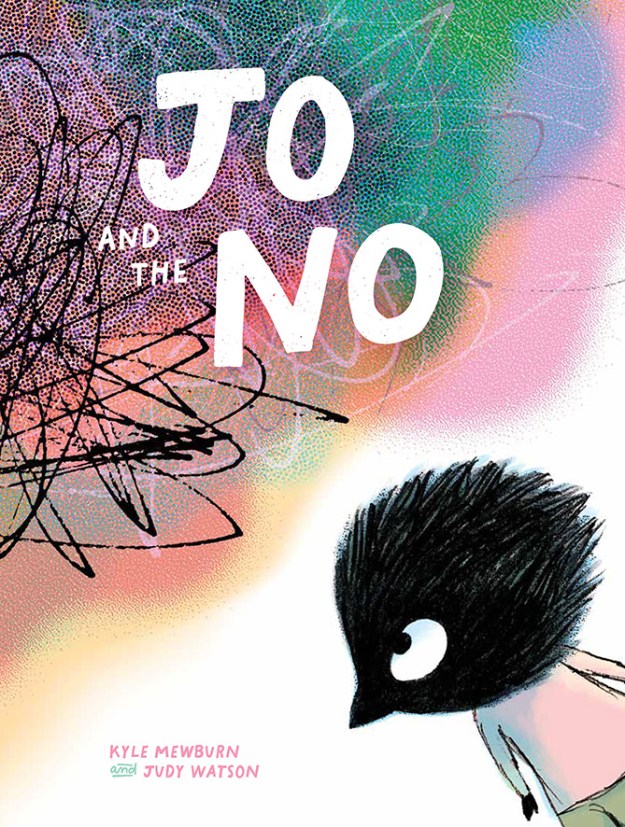
More on Rorschach ink blots in the next post. In the meantime, anyone who is interested in pre-ordering Jo and the NO, please click here or on the cover image below.

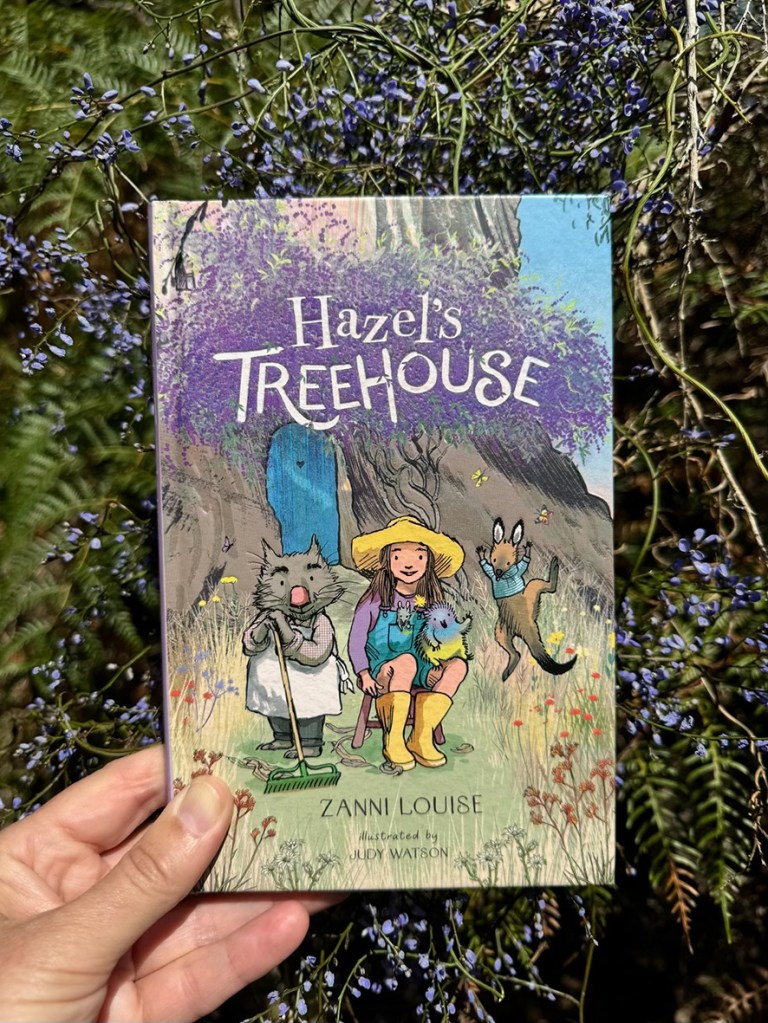
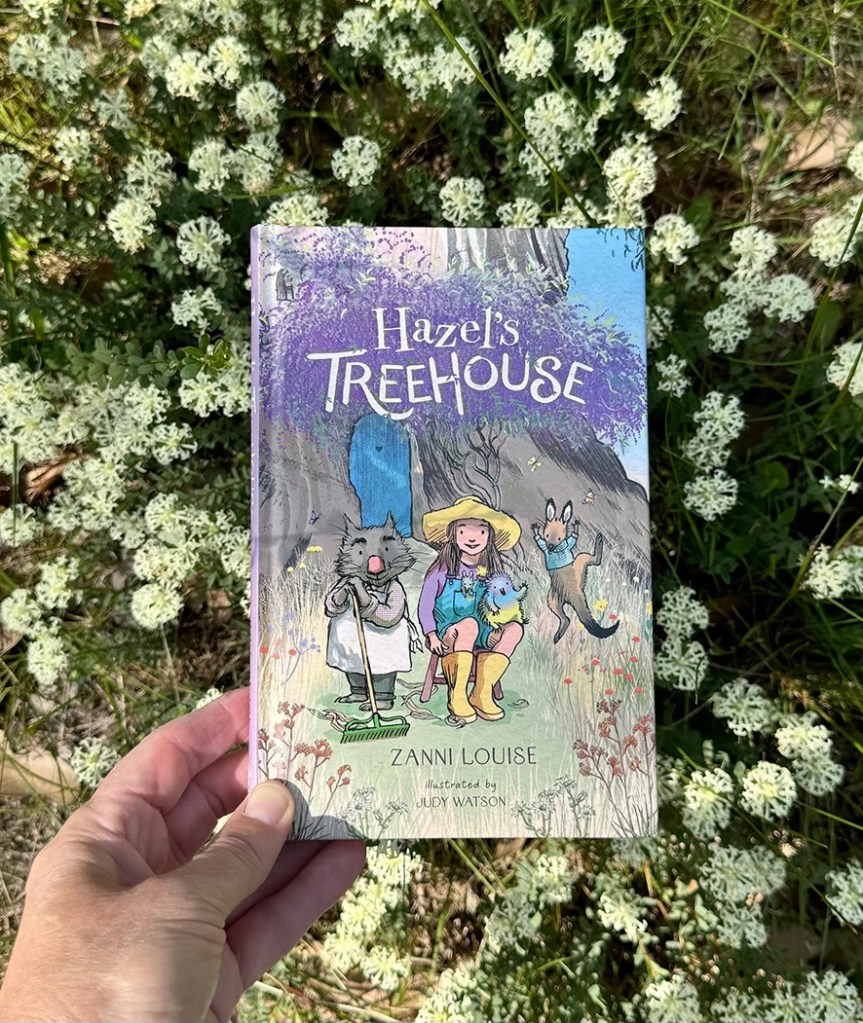
Hazel’s Treehouse – floriferous!

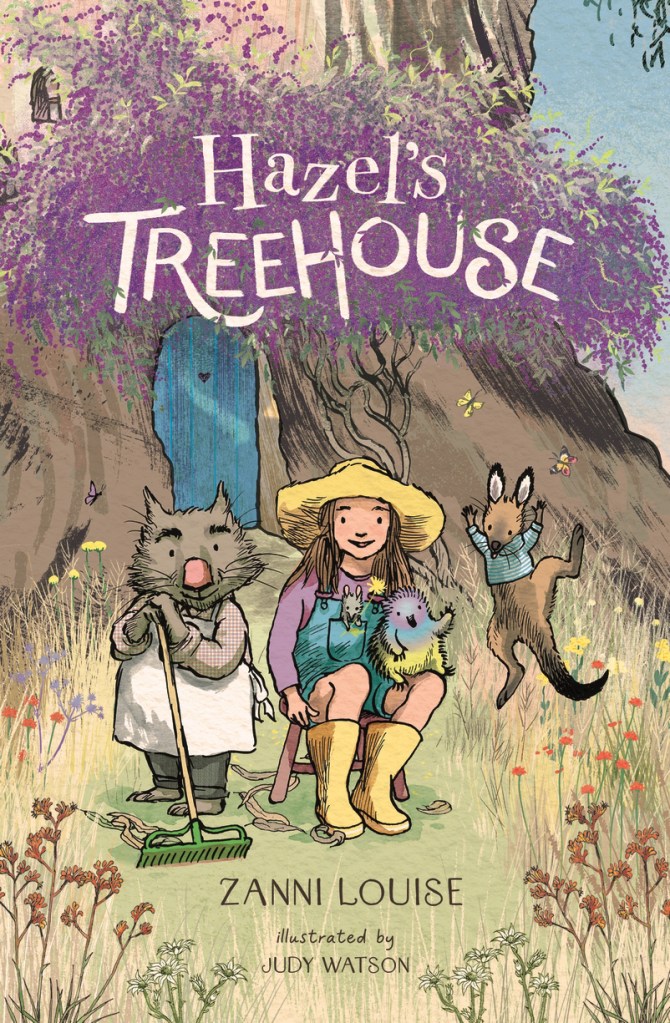
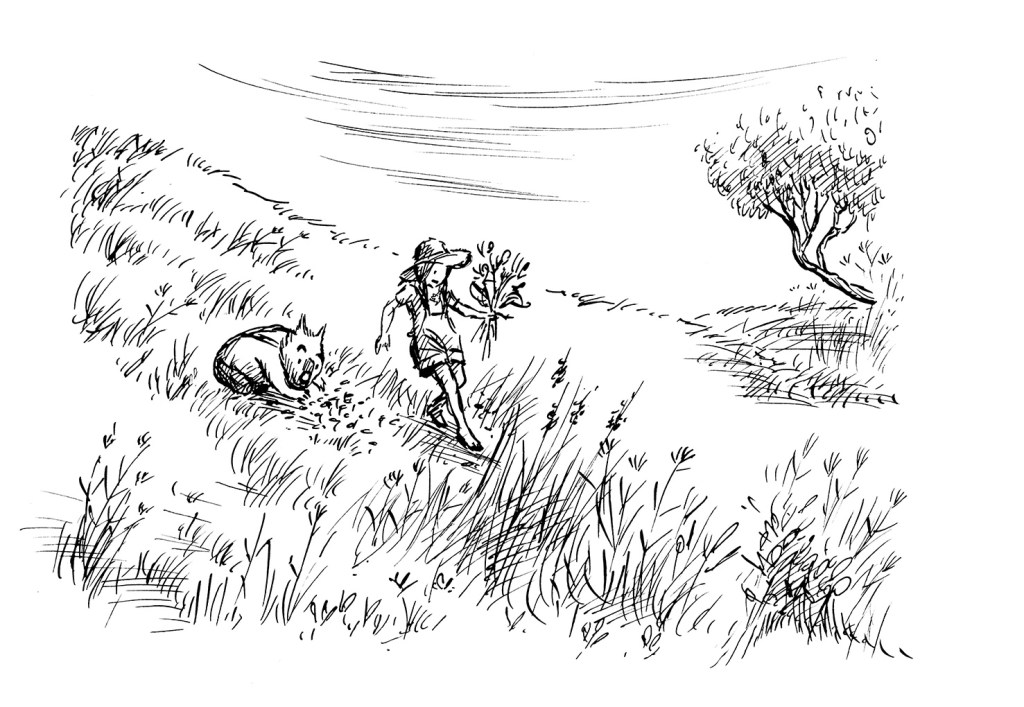
Hazel’s Treehouse is a new collection of gentle junior fiction stories from Walker Books Australia. It’s written by Zanni Louise, illustrated by me in dip pen and ink and it’s wrapped in flowers from its embossed hard cover and purple endpapers, through each of the ten stories to the creator biographies at the end.

Zanni’s a talented and prolific author across all age groups from the very young to YA, and she’s also an adept teacher. So I was delighted to be offered her stories to illustrate. You can check out her other books here if you haven’t already come across them.

Everyone except Odette is cloud gazing. Odette is bouncy so she’s rolling down a hill somewhere.

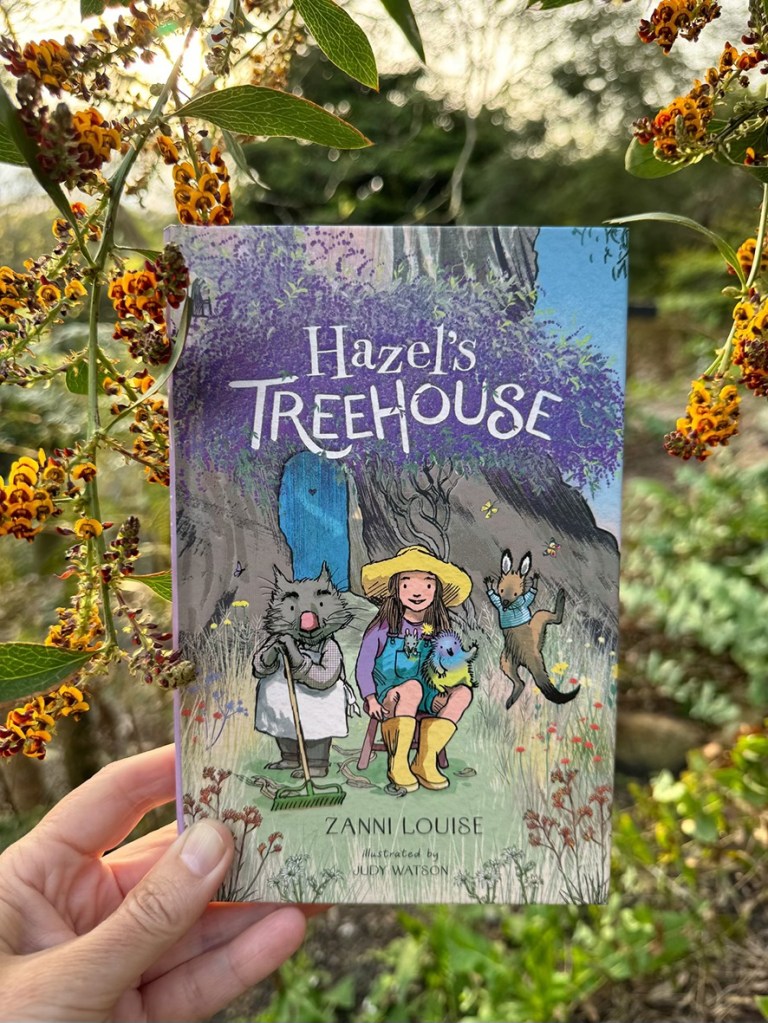
The book came out at the start of November amid an exuberance of spring flowers in our garden and local surrounds, because we’re lucky enough to live opposite a creek reserve and just down the road from a retired reservoir set in native bushland. I loved taking my advance copies of the book out for walks in the bush and photographing it against whatever was in bloom. There’s a floral sampling below, including some of the show-offs and some of the delicate species that people may overlook. In much of Australia, harsh weather, shallow topsoil and unreliable rainfall have combined to evolve plants that conserve energy with small blooms and avoid dehydration with sparse leaves. These plants are quietly beautiful and tough.

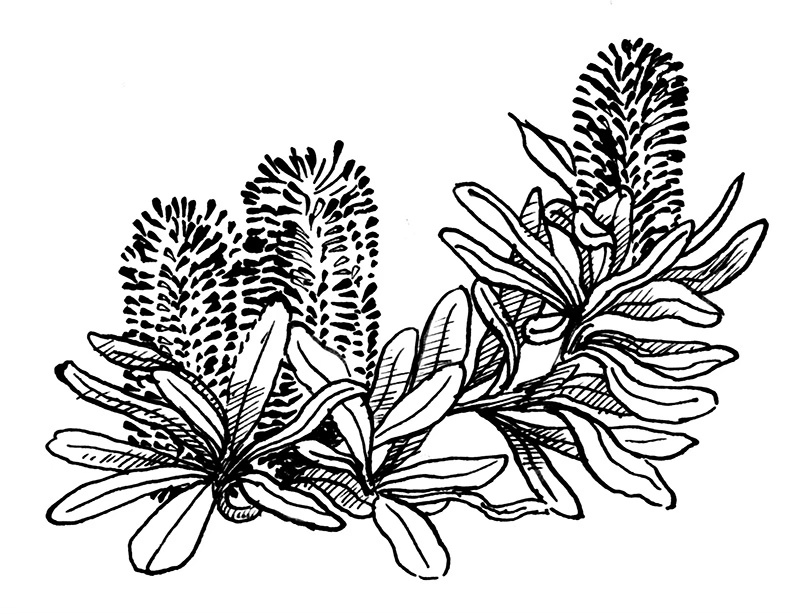
Zanni referred to several Australian flower species in her text, and because I had worked in nature conservation and had a horticultural husband brimming with indigenous plant nerdiness, it was an easy thing to embrace those references and run with them. I chose a plant to begin each story – whichever seemed the best fit (and that I felt capable of drawing!) Some of them were mentioned in the text and some were appropriate for other reasons. Christmas Orchids (Calanthe triplicata) adorned the Christmas story ‘A Very Tiny Day’. Coast Banksia (Banksia integrifolia) was used for ‘A Beach Day’ – even though the gang never made it to the beach. (You’ll have to read it to find out what they did instead, but they still managed to use their goggles and flippers.) Sometimes, if there was no obvious link, it was an opportunity for me to feature some of my personal favourites, like Hibbertia or Pimelea.

Christmas Orchids (Calanthe triplicata) for the Christmas story ‘A Very Tiny Day’
Walter demonstrates the correct method for cooking Christmas pudding. (Flour instead of flower here.)
Coast Banksia (Banksia integrifolia) for ’A Beach Day’
Tiny demonstrates the correct fit for goggles in ‘A Beach Day’. (Shown with some wet looking Wallaby Grass)

When I first noticed the plant references in the text, I was looking for clues to the location. The setting for any story is also a major ‘character’ in the story, creating an atmosphere, a flavour, and the physical framework into which our reader can immerse themself. So it’s one of the first things that I’m feeling for when I’m reading a manuscript for the first time. I thought that Zanni might have chosen plants local to a particular area where she’d prefer to see her stories illustrated. But the plants she mentioned are found all over Australia, and in some cases nowhere near each other. This told me that my setting was an imaginary location in a magical Australia, so… no rules! But for the most part, I’ve illustrated this imaginary place as a Grassy Woodland.

The NSW Office of Environment and Heritage describes Hazel’s surroundings to a tee: The Grassy Woodlands are a widespread and quintessential feature of rural Australia. Dominated by eucalypts, typically boxes and red gums, grassy woodlands have a relatively open canopy with sparsely distributed shrubs and a conspicuous and diverse ground cover of tussock grasses and herbs. Ephemeral grasses and herbs appear from seed banks following rain, while ground orchids and lilies emerge after fires to produce a spectacular floral display. 

Walter, Hazel and Tiny (very small!) collect flowers in ‘Someone’s Special Day’

Hazel’s Treehouse has already been met with a flowering of warmth and enthusiasm from readers and reviewers. There’s much more to share about the process of illustrating it, but it seemed right to mention the flowers before the close of the last day of spring!

Oh, and here’s 54 seconds of baby Eastern Rosellas in the nest box in our garden, looking exactly like muppets.

Endpapers (part one)

Endpapers are a particular favourite of mine, both old and new. I love to create the ends for the books that I illustrate. They’re wonderfully freeing, because they’re not required to go alongside an author’s text, nor do they need to follow along in the exact same style or medium as the other illustrations. They need to feel as though they belong in the same family as the rest of the book, but they can fly off in all sorts of playful directions, and frequently do.

Sometimes it’s lovely to take a purely decorative approach, using whatever medium seems complementary to the book, without direct reference to the story at all. Decorative endpapers may just be stripes, spots or splashes and can look beautiful, as though the reader is opening a brightly wrapped present – which in a way they are!

Mostly, I am so involved with the text that I can’t resist linking the ends to what’s inside. Sometimes I like to refer to a repeating motif in the book such as seagulls, and a little black cat as we see in Thunderstorm Dancing. Or I refer to the setting of the story, such as the forest in Leonard Doesn’t Dance. Sometimes I like to tell a bonus story without words, so that when the book has been read and the story is over, there is somewhere to linger and to imagine our characters in their next adventure or in their everyday lives.

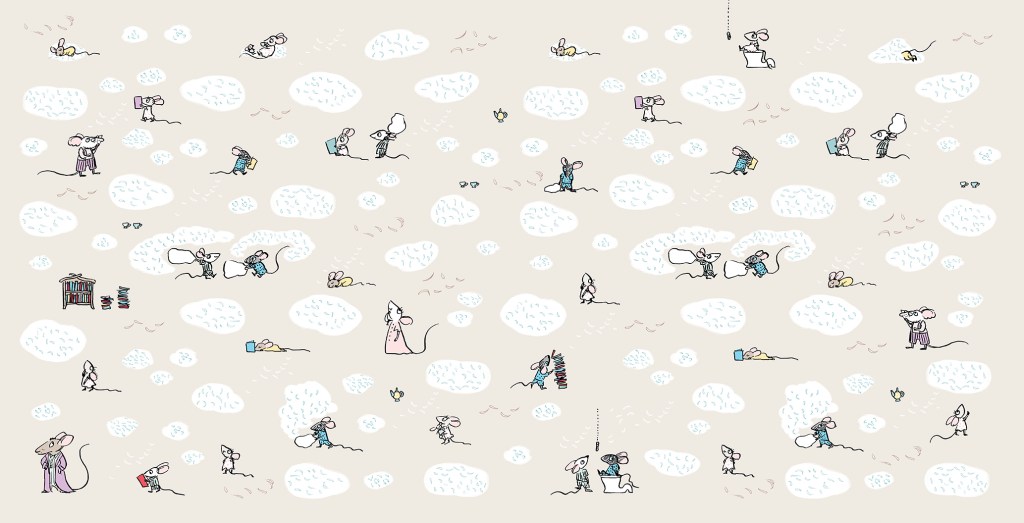
Endpapers for Goodnight, Mice! by Frances Watts and Judy Watson.

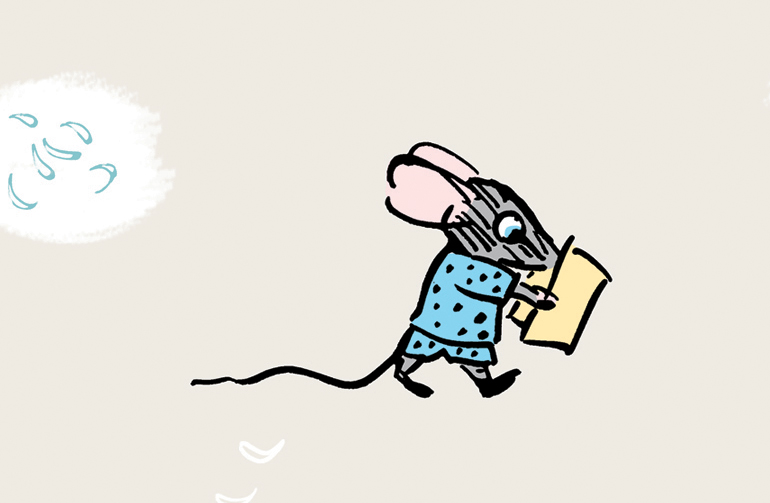
Goodnight, Mice! is a bedtime book, so the ends are muted in colour and evocative of a pyjama pattern. But I really wanted to play around a little further with these sweet mice, so I made tiny, simplified sketches of all of the family members. It was fun creating shorthand versions of each of the characters. The twins of course, are causing mayhem with a pillow fight, and there are stylised feathers floating everywhere (made by pressing down hard with my poor, mistreated dip-pen nib).

Mitzi and Billy – up to mischief as usual.
I feel that Clementine will not be happy about this.
Books and bedtime go together like cheese and… mice. So I put lots of books on the ends as well.
I really hope Billy is not going to flush before Mitzi gets off the loo…
This is the original family from the internal illustrations. Still loose, but more fully formed. (That was not a toilet joke.)

The endpapers for Thunderstorm Dancing were originally to have been printed in two colours, which is why I set them up in black and blue, (black and red for the rear ends) but Allen and Unwin decided to print in four colour process instead. In the internal illustrations, I had sneaked in a playful visual gag where the cat is greedily eyeing off all the fish. I thought it only fair that he got to eat his fish in the end. So below you see him washing up after his meal. (The seagulls are not amused.) In this case, I decided to do the reverse of what I had done for Goodnight, Mice! Instead of shrinking and simplifying the characters from the book, I enlarged them and made them more naturalistic in style.

Front endpapers for Thunderstorm Dancing by Katrina Germein and Judy Watson.
Rear endpapers for Thunderstorm Dancing.
This is a detail of the cat as it appears, quite small, in one of the internal illustrations.
Front endpapers for Leonard Doesn’t Dance by Frances Watts and Judy Watson
Rear endpapers for Leonard Doesn’t Dance.

The ends for Leonard Doesn’t Dance are mostly decorative, but they also set the scene for the story. I wanted them to be sumptuous, because I enjoyed making Leonard’s forest world so much. The front and back ends are continuations of the same setting, except that the moon is lower in the sky after the birds have been partying all night. The party lights can be seen in the distance.

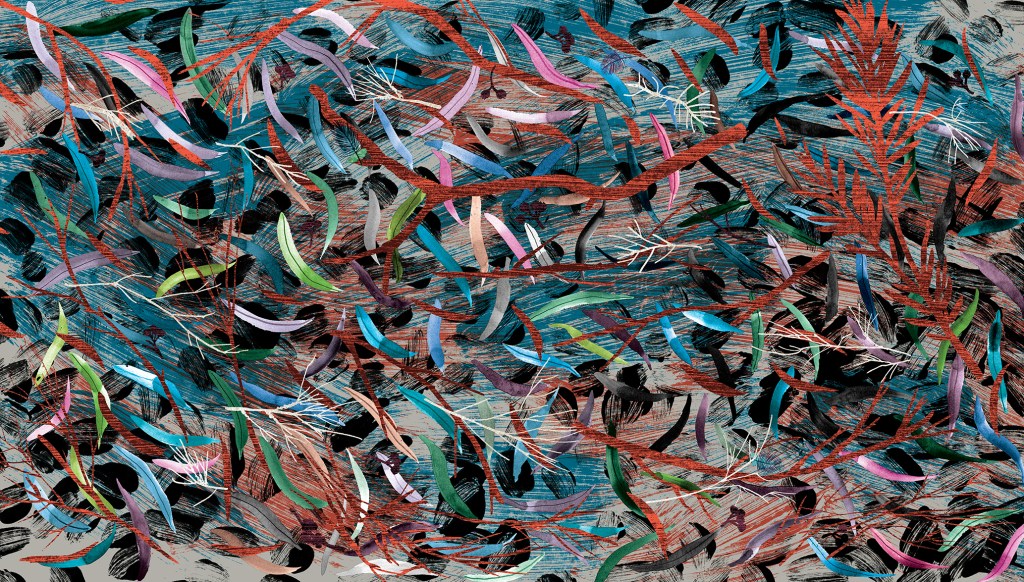
Endpapers from Searching for Cicadas by Lesley Gibbes and Judy Watson

These ends are mostly decorative too, but they hint that in this story we will be looking closely at the forest floor. They were a delight to make, involved a lot of glorious inky mess, and they have their very own classroom activity. You can find it here.

Now we get to my latest endpapers – the ends for When You’re Older.

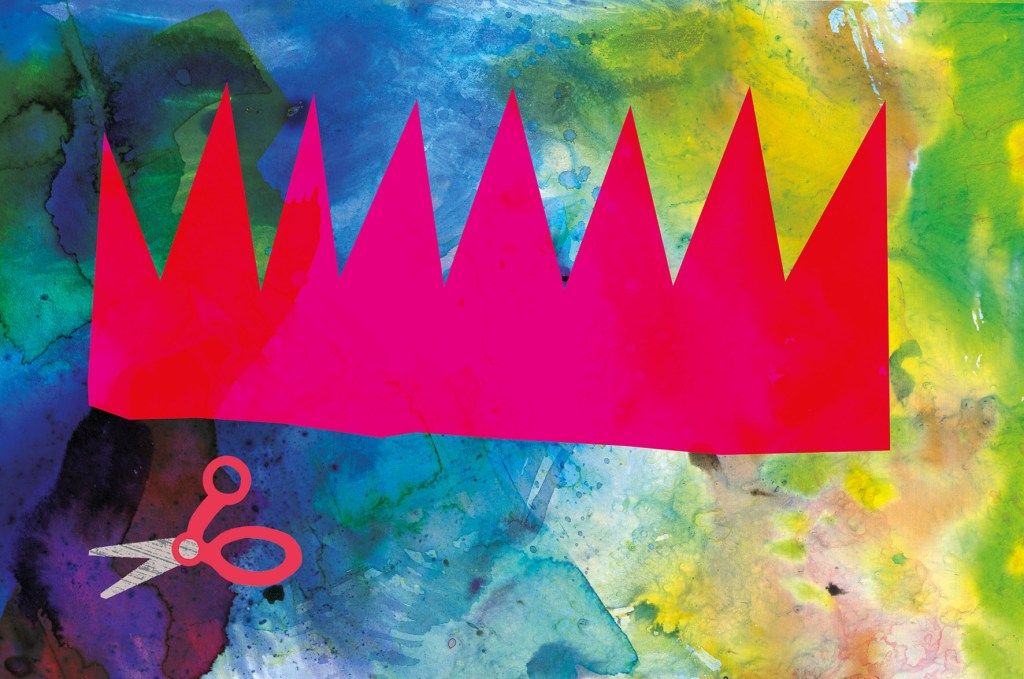
When I was thinking about what kind of endpapers would be best for When You’re Older, one of my ideas included origami sea creatures, and one of them included a paper crown. They looked like this.

There were a few reasons why these ideas might have been fun and effective:

• Firstly, they are bright and cheerful and the scale of the images is large, which made a nice contrast with the fine detail of much of the book.

• Secondly, they are an easy way to communicate to someone choosing a book, that the story is suitable for a young child.

• Thirdly, they help set the opening scene in the homely world of the brother who is enjoying some paper craft. The crown concept shows us a close-up of what he is doing on the title and half title pages. The origami concept gives us an example of something he might do on a different day. And it leads the reader into the theme of sea creatures that repeats throughout the story.

In the end we decided that the treasure hunting scene (below) would be best, because it is truly dreamlike, and hints that we will be entering a world of the imagination. It reflects the illustration style of the adventure part of the book; full of detailed vegetation, creatures real and imagined and with our boys painted in silhouette. But it is subtly different, in that it is rainbow hued and uses blue instead of black for the details of the ship and characters. The blue has a hazy feel and helps to suggest the dream state. The feel of the endpapers is decorative, but it is really a ‘bonus story’.

Endpapers for When You’re Older by Sofie Laguna and Judy Watson

I had a second idea for a bonus story and I hoped to have different ends front and back, telling two dream adventure tales. But it would have taken too long to complete. I hope to make the second illustration as a standalone, and if I do it will be available as a print. (It involves a giant squid, deep sea diving and more treasure!)


Musings on drawing and architecture from a non-straight-liner

From Tansy Magill by Carol Ann Martin

Some people can draw any building or interior with a sensitivity that invests it with warmth and personality. I truly admire them. For me, all those straight lines are problematic. I don’t feel any love for drawing architectural shapes, even though I love architecture itself. I prefer the outdoors and organic forms, including people and animals. The surface textures, the curved lines and the movement of figures or landscape are much easier for me to successfully express.

Most illustrated books require at least some built spaces to be drawn, and I’ve dealt with this in different ways for different book projects. Here are a few of them.

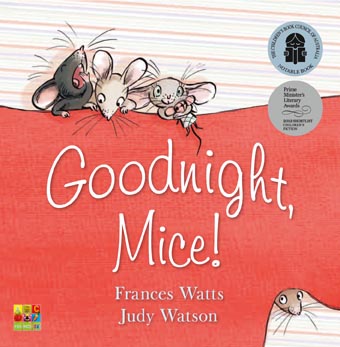
Cover design by Sandra Nobes for ABC Kids (HarperCollins). I remember getting emotional when the publisher suggested the mice could be printed with a spot varnish. I felt that being soft and velvety creatures, they shouldn’t be made hard and shiny! I get quite attached to all the characters in my books and become a bit protective. Embarrassing, but true.

In Goodnight, Mice! By Frances Watts, I made the house organic, the walls, doorways and furniture curved. I took my inspiration from straw bale homes, wattle and daub homes, and hand-crafted furniture. Using a dip pen and ink, there was little opportunity to be overly fussy. Drawing with a dip pen sometimes feels like trying to control a half wild pony that’s running away with me.

The opening scene from Goodnight, Mice! showing a very small house with an enviable chimney.
Getting ready for bed, and selecting a book from a rather quirky bookcase.
The kind of bed that inspired the mousy furniture. (The mice must have used much smaller sticks!)
Sandra Nobes also designed this cover, for Allen and Unwin.
The book has just been re-released in paperback. Hooray!

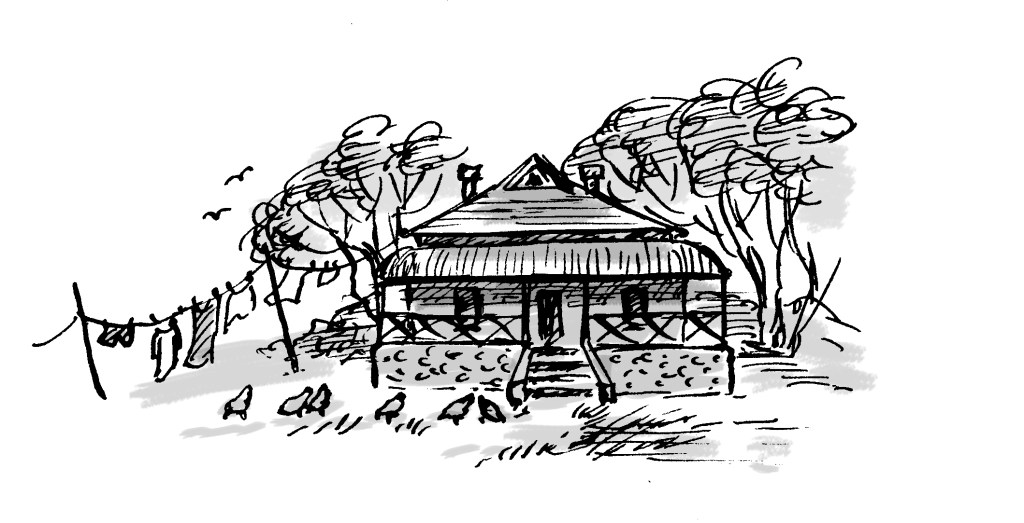
With Thunderstorm Dancing by Katrina Germein, I was happy with the small drawing I did for the back cover (below). Perhaps it worked for me because of the loose lines of the dip pen but especially because of the small size. There’s no room to fuss with a 30mm wide building. Snuggling the building into the hill and embedding it in a stormy sky helps to give it a certain ‘rightness’. It takes on the personality of its surroundings.

A small windswept beach house and matching chook shed for the back cover of Thunderstorm Dancing.

The veranda was perhaps not as successful as I would have liked, being rather stiff, but I made the focus the stormy lighting; the contrast between dark clouds and the golden late afternoon glow of the beach and figures. I added texture to soften it a little. Eep!

A lot of straight lines for a non-straight-liner! Hopefully the focus remains firmly on the atmosphere.
An interior that had to look warm and cosy, yet storm-lit. My selection
of furniture reflects again my need to put curves in wherever possible! And it is funny to me
to see how often my colour scheme is a soft, bright red and a greenish teal.
This lovely cover design is by Amanda Tarlau, for Walker Books.

My garden shed from Searching for Cicadas by Lesley Gibbes, was created in a similar way. Mostly pencil and wash, but with added texture and digital colour. (Note the soft red and greenish teal colour scheme!) My architecture leaves room for improvement, but hopefully the warmth of the characters on the page, the light, foliage and pets set the right tone. And on the next page, we happily marched off into the bushland away from human structures! Phew!

Another black cat. I have a one-eyed black foster cat climbing over my drawing board as I’m typing this
and my three-legged dog Noodle appears in the illustration, proudly flourishing four entire legs.
Off into the natural world.

I also have an unpublished project, where the my buildings again reject straight lines. Based on the trulli of the Puglia region in Italy, they have lovely domed roofs and soft curving interiors. I even stayed in a glorious trullo here, and did some research for my illustrations.

Trulli from a dummy book
Trulli homes in Ostuni, Italy.

But it was exciting to take a different approach to the house in When You’re Older by Sofie Laguna. Here I used the straight lines of the room and other man-made objects to my advantage. I accentuated them, taking inspiration from the marvellous Ezra Jack Keats and pared them back to simple blocks of colour that mimic paper collage. Now they acted as a foil to the scenes beginning on the next page, where the story moves into the imagination and benefits from a strong contrast in style.

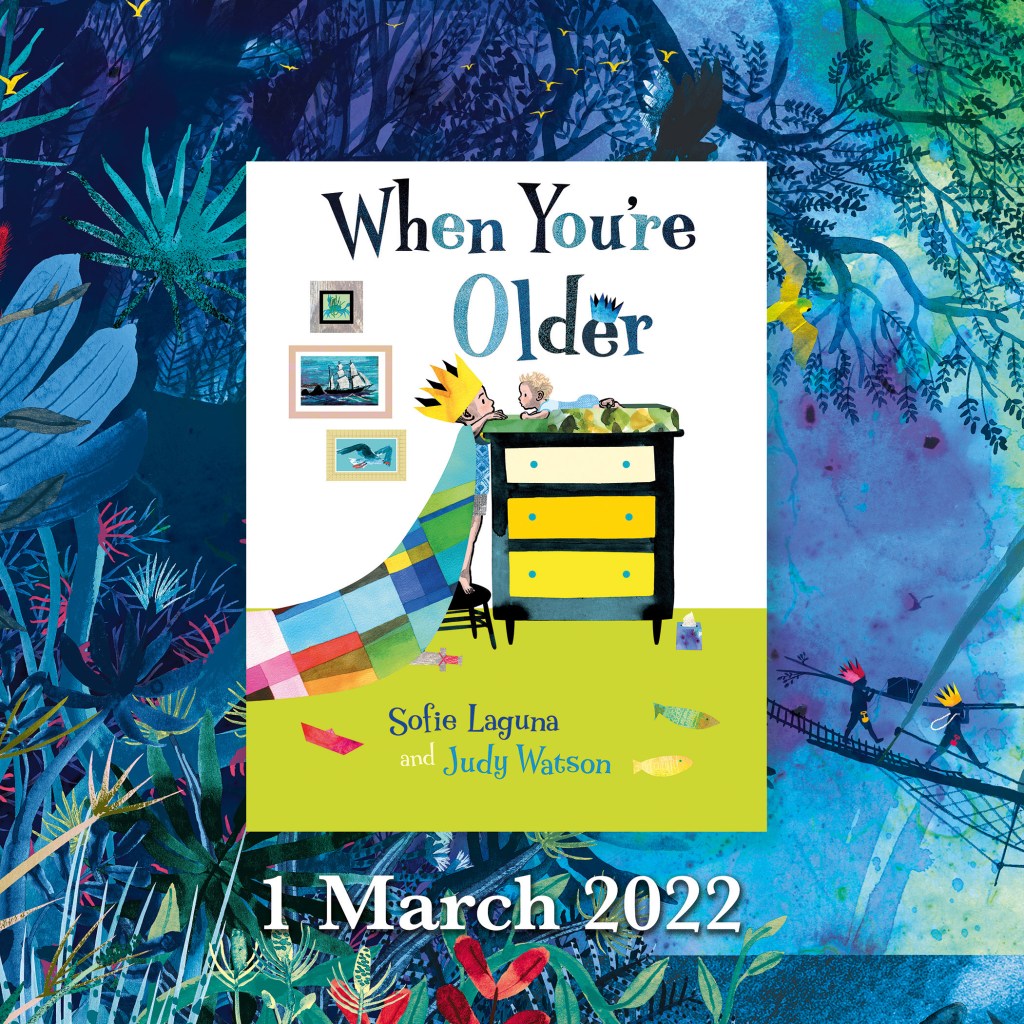
I know you’ve seen it already, but here is the cover of When You’re Older,
designed by Sandra Nobes for Allen and Unwin. Out 1 March 2022.
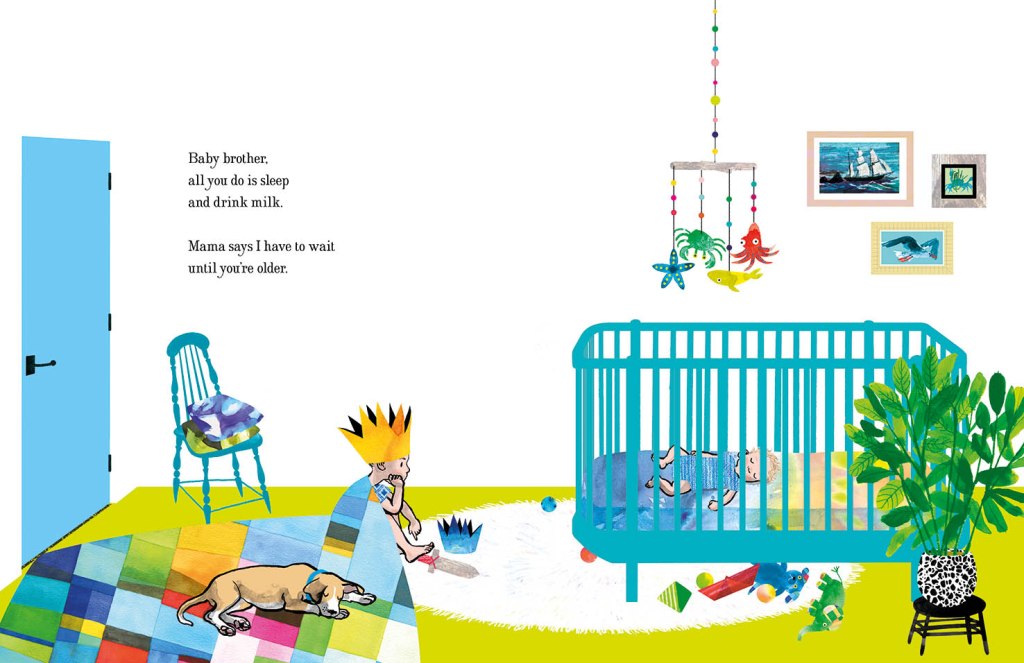
Straight lines, no regrets. The opening bedroom illustration in When You’re Older.

In the bedroom at the start of the narrative, we have animals and ships on wild seas contained in frames that have been reduced to a series of rectangles with no attempt to suggest a hook or a natural hanging angle. The boy too is sitting, waiting in a rectangular room like the paintings in their frames. But the small animals dotted around the room, the houseplant and the two kinds of boat (origami and painted) have fed his prodigious imagination which breaks loose as we turn the page.

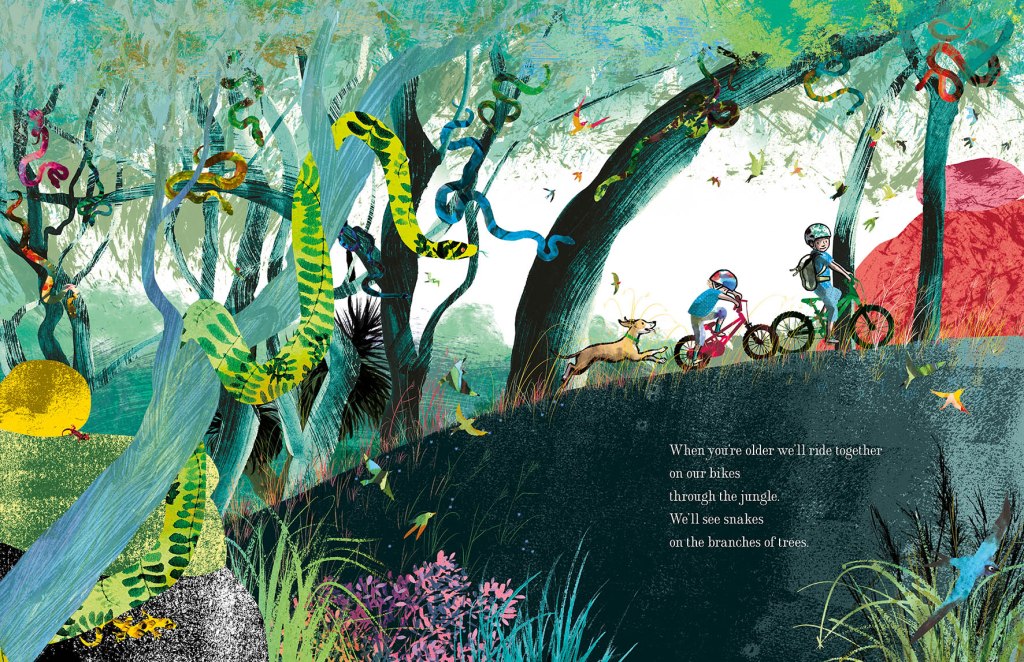
Rampant curves and movement take over the book from here. (Do I spy soft red and greenish teal?)

Here everything has broken out of its containment and we see the beginning of an undulating landscape, teeming with life and with an exaggerated forward slant like a slingshot that has just been released to propel our characters forward into the world.

I’ve used the solid graphic shapes here and there through the book, most often for man-made things like bikes, ladders, tents, and the fanciful double-ringed shape that suggests a view  through binoculars. So the contrast between rampant texture and solid graphic shapes continues. But on the pages dedicated to the immense power of nature, it is not really in evidence at all, and expressive brushstrokes set the entire scene until we return at last to our original bedroom.

Upcoming events to celebrate When You’re Older

Wednesday 23 March to Tuesday 19 April
Colour, Line and Collage: Mixed media works in and around books.
Exhibition of original works including the patchwork paintings featured in When You’re Older. Some prints of the illustrations will also be available to order.
At Streamline Publishing and Gallery
22 Commercial Place, Eltham 3095
Open Wednesday to Saturday 11am – 4pm, Every second Sunday 1pm – 4pm.
Enter from the Town Square.
Above Eltham Bookshop

Saturday 26 March – kids’ drawing / collage workshops and signed book sales.
Frankston Library
60 Playne Street, Frankston
Phone 03 9784 1020

Sunday 3 April WORKSHOP 2.30pm – 5.30pm
STORYBOARDING – taking a text and moulding its shape on the page.
A book illustration workshop for adults and young adults.
This three hour workshop will be hosted by
Eltham Bookshop and held at Streamline Publishing and Gallery
22 Commercial Place, Eltham 3095 (Above the bookshop)
To coincide with the launch of When You’re Older and the exhibition
Colour, Line and Collage: Mixed media works in and around books.
I will take participants through my process: How I responded to Sofie Laguna’s text and, together with the publishing team, brought her words together with my ideas to create finished art for the book. After a short break, participants will use a sample text to create a storyboard of their own.
Entry $80 includes a signed copy of the book, light refreshments and all materials.
Bookings can be made through Eltham Bookshop
Tel: (03) 9439 8700
Email: books@elthambookshop.com.au

When You’re Older

In stores from 1 March, 2022.

On the first of March When You’re Older will be in bookshops. Hurrah! And I’ll be in two of them on the same day, decorating the windows to celebrate the release of the book. I’ll be starting out at The Little Bookroom and then zipping across to Readings Kids.

I’m really happy with the cover. We went all over the place exploring cover options, including under the sea and up a tree. But this one feels right. The focus is squarely on those two faces. They’re the heart and soul of the book. (I admit I’m a bit infatuated with the chest of drawers, too.)

Book designer Sandra Nobes did an amazing job with the typography. Her title lettering expresses the tall and short of our two characters, complete with small crown. And her selection of typeface for the creator names took inspiration from my hand-drawn letters and is a near perfect match with a few less curls. (You can see my curly writing above, with a baby seemingly floating over it!)

If you’re thinking the book is about nappy changes, don’t be fooled by the box of tissues, although you might need one yourself. Perhaps, like me when I first picked up the manuscript, you’re thinking that the book will be about sibling rivalry. It’s not.

Inspired by hopes for her own two children and interestingly by the imprisonment of journalist Peter Greste in 2013, Sofie Laguna’s words are about love and about brothers looking out for each other. About a big imagination. A big world. A big adventure and big danger.

There are also lots of tiny things.

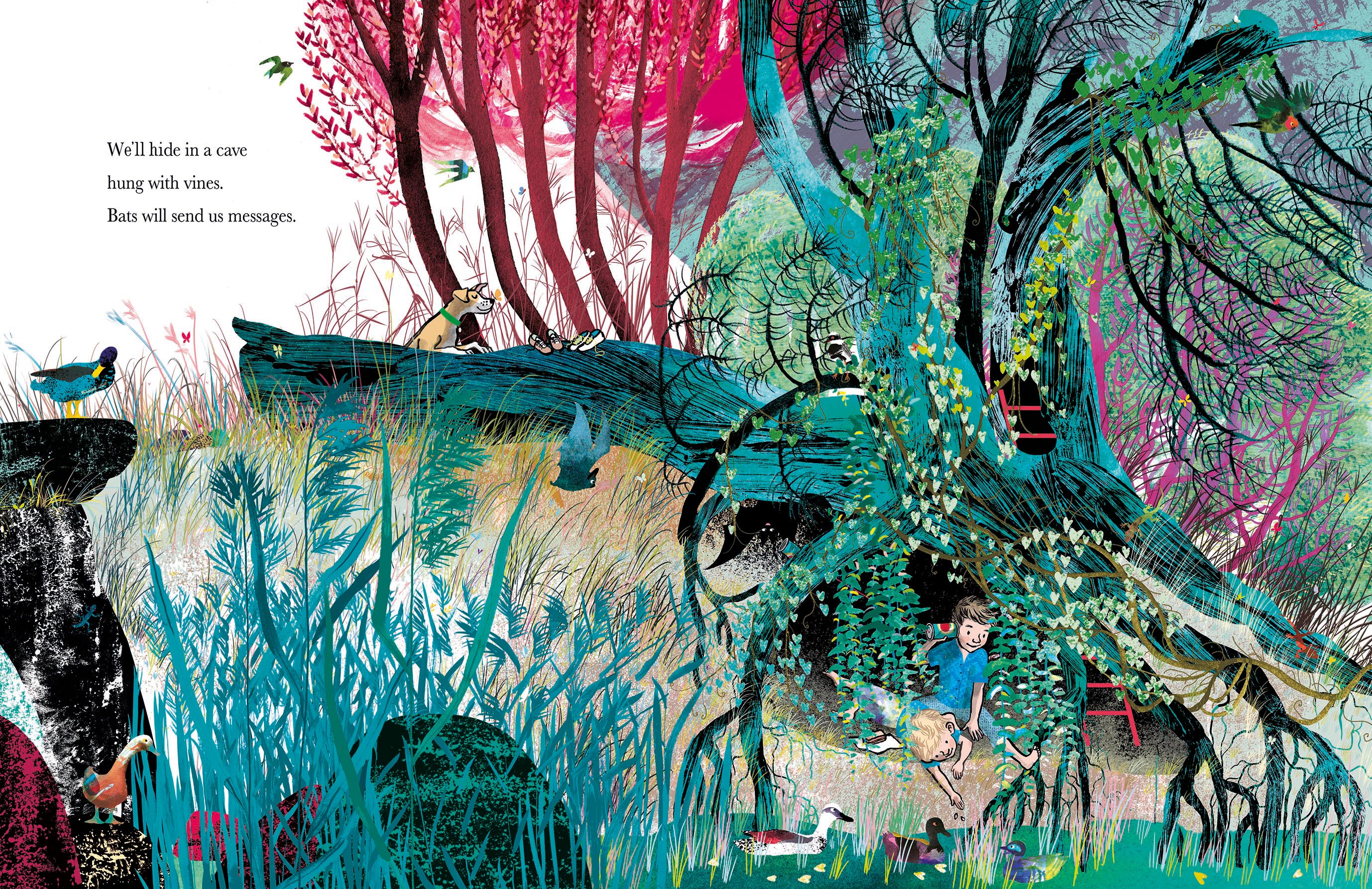
One of the great joys of parenting small children for me, was the experience of reading aloud to them. I loved to witness their immersion in the world of each picture book; their interaction with the page as well as the story, fingers keenly pointing out the important parts, and often the tiny details. So while I was working on When You’re Older, I imagined little hands holding the book and little fingers pointing. Every lizard, butterfly and bird was made for this purpose. Every footprint in the snow.

I think there will be much counting! How many birds can you find? How many bats? Ducks, lizards, butterflies? These small things are only footnotes to the main story, I know. But I am so looking forward to seeing some real fingers exploring the book.

Please pop in and say hello if you’re in Melbourne on 1 March or in Mornington on 4 March. There will be signed books available to purchase. I’ll be the one with the paintbrushes and Posca pens, decorating the windows. And I look more or less like this.

How many fishes can you spot?

Studies in blue

Today I have been working on the mid section of roughs for Leonard Doesn’t Dance. It’s a difficult time for poor Leonard.

As I was drawing, in search of the right feeling in his posture and expression, I thought it might be interesting to picture book enthusiasts to see some of the thought that go into each illustration. So here we go.

Leonard RHS studies lores

An A2 sized page of studies for a vignette on page 15. (8 scans later, boy do I wish I had an A2 sized scanner!) I have numbered my drawings in order in case you are interested to see the progression of ideas.

I’m not sure if you’ll be able to read my notes on the page. Leonard is feeling sorrow, resignation, defeat, regret, longing. Expressions I want to avoid include alarm, fear, guilt, anxiety or furtiveness.

Those who draw will know how a tiny variation in the curve of an eye or eyebrow, or the tilt of a head may change an intended sorrow into an accidental horror.

L sad 3

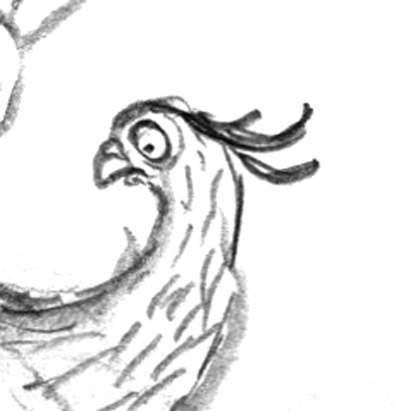
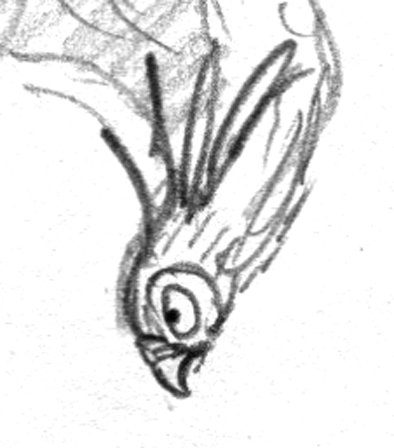
No.3. The heavy line at 10 o’clock on the eye gives the expression wretchedness. Otherwise the large, round eye looking backwards might have indicated a fear of pursuit.


L sad 4

No.4. This is my preferred facial expression. It says best what I think Leonard is feeling.

L sad 1.jpg

No. 1. The expression seems a mix between extreme mortification and horror, with a bit of disgust thrown in. The up-curving neck shows too much energy. I want Leonard to look a little defeated. 

L sad 6.jpg

No. 6 Although I like the body posture with raised wings, the face here is not quite as good as  that of No.4. The head tilt is less submissive, more head-butt. The crest is more raised, the eye less miserable.

L sad 2

No.2. Utter dejection with 1920s silent movie era eye makeup! Leonard is not even looking back, just downwards. I think I’d rather he looks wistfully backwards as it indicates a suppressed longing to join in. I don’t want our boy to be completely bereft of spirit. Poor lad.

Sometimes a thing like this can be positively excruciating if you can’t get it right. But today I enjoyed it. Leonard is  very accommodating.

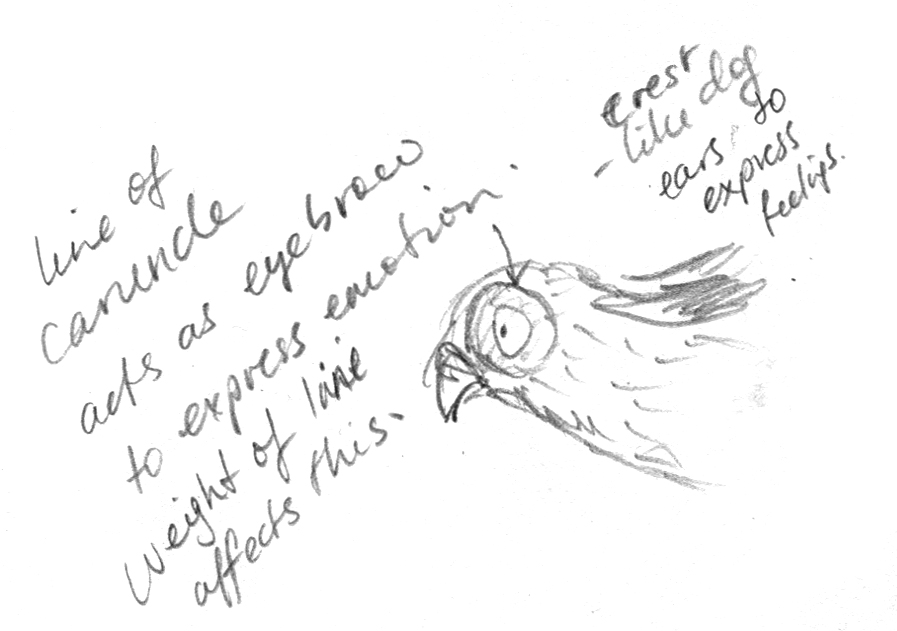
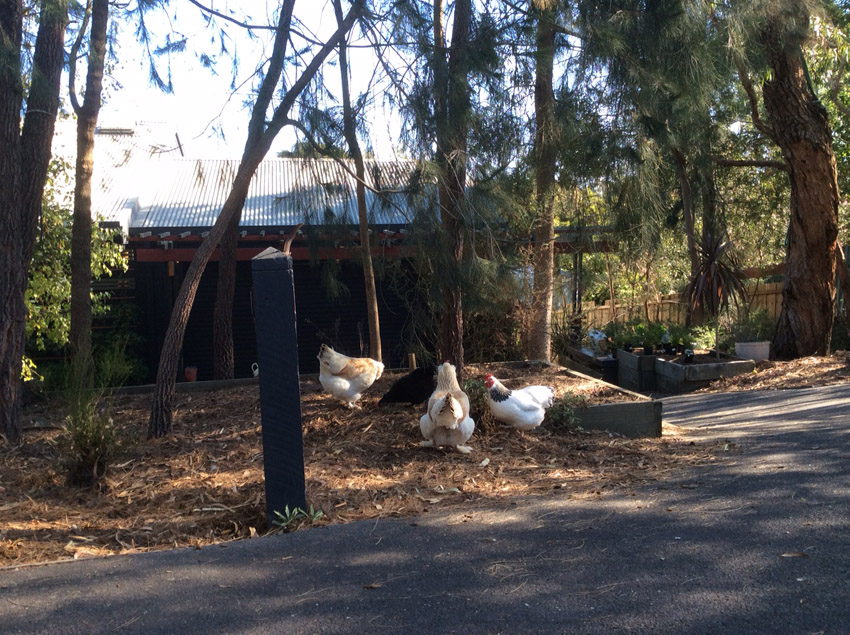
In Leonard’s case, I have the eye to work with and also the caruncle (a patch of coloured skin) around his eye, which acts as an eyebrow or an underscore for the expression in his eye. And living with a flock of chickens has taught me what a sick or miserable chicken looks like; the hunch, the fluffed up feathers, and sometimes the dropped wings.

L dejected.jpg

But with Leonard’s crest I depart from the nature of birds. A fluffed up crest in the real world might indicate bird misery, but I’m using Leonard’s crest more in the way of ears like a dog, that drop when miserable, raise when interest is sparked. That is probably a language more readily identifiable to children, since more have dogs than chickens… in Australia at least.

So that covers the face. What about the body?

dejected posture.jpg

He’s retreating, so he’s best drawn partly from behind. The fluffed up hunched shoulders, I mentioned earlier. He should look clumsy, so I experimented with leg postures. He has just alighted so I need to suggest the flight just finished. And he’s walking away and downwards, so I have to suggest the forward downwards movement as well.

One challenge is the wings. Raised wings (6) could suggest a certain lifting of spirits. Spread wings look nicely clumsy (5) but tend to get in the way of the main subject (his lowered face). Lowered wings (2, 4) may be best for misery but are not so good for movement and flight. (In 2 he looks positively beaten. It’s a bit much.)

wings raised.jpg

Today as I was working on this, I once again remembered my fabulous school art teacher Cecily Osborn. I remember her explaining how artists can seek to depict movement in a motionless work of art. She used the ancient Greek sculpture of a discus thrower Discobolus by Myron as an example. The sculpture doesn’t depict any real life movement employed by an athlete whilst throwing a discus, but instead attempts to creatively suggest the movement that came before as well as hinting at the movement to follow the instant in time depicted by the sculpture. The sculptor borrows our imagination to evoke a movement that he can’t create in reality.

roman bronze reduction discus_thrower_Myron

A Roman bronze reduction of Myron’s discus thrower. The original artwork was made around 450BC.

“The potential energy expressed in this sculpture’s tightly wound pose, expressing the moment of stasis just before the release, is an example of the advancement of Classical sculpture from Archaic.” (says Wikipedia)

I’m very serious today, aren’t I? Do you think I am overthinking this?

I don’t think so. These thoughts take longer to describe than they do to think. All this and more goes through an illustrator’s head as he or she is drawing. And a lot of it is subconscious too. But it’s part of what makes the pictures work, it’s part of observing our world, and how the experiences of life feed into an artist’s work. I love that about my job.

But here are a couple of over-excited woodpeckers, because I wasn’t just drawing misery today.

Cheerio!

woodpecker black and white judywatsonartwoodpecker judywatsonart

Hello studio, hello birds, hello autumn.

It’s the second week of the school holidays and I’m back in the studio today after a busy week with the family. The boys are visiting with their grandparents in the country all this week. And I have no work to show you yet, so I thought I’d just say hi.

I really love the autumn in Victoria. The light is soft and warm with honey tones like a dessert wine. (yum.) It’s the best time of year for closing your eyes and lying in the sun,

Hugo shaking apples down.JPG

for shaking apples from the apple tree,

last water fight of the season.JPG

or for having the Last Great Water Fight of the season.


But in the midst of this mellow finale, the wild birds have been rowdy today for some reason, as they were back in the spring when they were fighting for nesting sites and mates and eating each other’s babies!

This afternoon I saw a kookaburra nearly stun itself by attacking its reflection in our lounge room window, as a grey butcherbird watched closely, waiting for an opportunity. While the kookaburra sat on a branch recovering its composure, the butcherbird (3 flights up) dived down and audibly clouted it on the top of the head. Is that adding insult to injury, or injury to injury? The kookaburra raised its head feathers in lieu of a comb or a finger and looked outraged and rumpled but didn’t pursue.

Our chicken girls weren’t rowdy though. In fact, they were a little alarmed by the swooping and noises in the trees around them when I let them out this afternoon.

chicken conference in driveway.jpg

A chicken conference under the sheokes.

Takara spots a kookaburra.jpg

Takara demonstrates her funky chicken dance as three kookaburras overhead cause some concern with their noisy display. 

fluff balls eating south african food.jpg

Our two Salmon Faverolles, Takara and Cressida Cowell eating peanuts in the driveway. Takara (on the left) has started laying and hence the big, red comb. Cressida is a late bloomer and a big, fat baby who galumphs about tripping over her ugg boots. She is by far our largest and heaviest chicken and at the bottom of the pecking order. It’s amusing to watch tiny Storm scold her whilst barely reaching up to Cressida’s fluffy chin at full stretch. 


Meanwhile, back in the studio, for want of new artwork to show you today, here are some of the musicians that didn’t make it through the auditions recently.

They don’t mind. They have a regular gig down at The Swamp on Thursday nights.

swing band.jpg

Here are a pair of cockatoos do-si-doing. They are going to try to squeeze into a spread for Leonard Doesn’t Dance tomorrow.

20-21 dancers 3.jpeg

My drawing board now that the sun has gone down,

drawing board.jpg

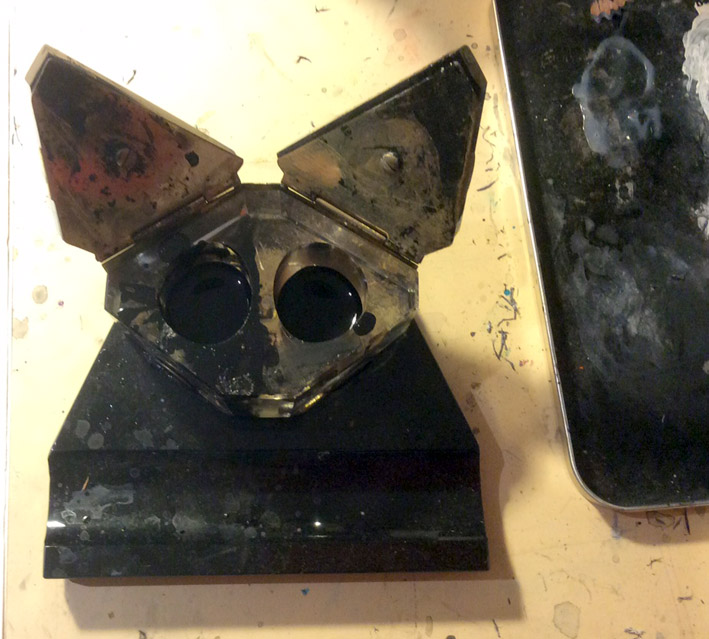
My black Cornish Rex inkwell,

Cornish Rex ink well.jpg

and last of all, something that isn’t here yet. The Squirrel. A wood fired stove that will soon be warming my studio. Woohoo! 

morso-1430.jpg


Bird Immersion (2)

This is another quickie post. It’s all terribly busy around here.

Even the birds are looking a bit concerned.

call duck

I’ve often seen ‘Call Ducks’ advertised when I have been browsing the chickens-for-sale ads (as some of us do). I feel this may be what they look like.


worried galah

And this galah barely knows which way to turn.

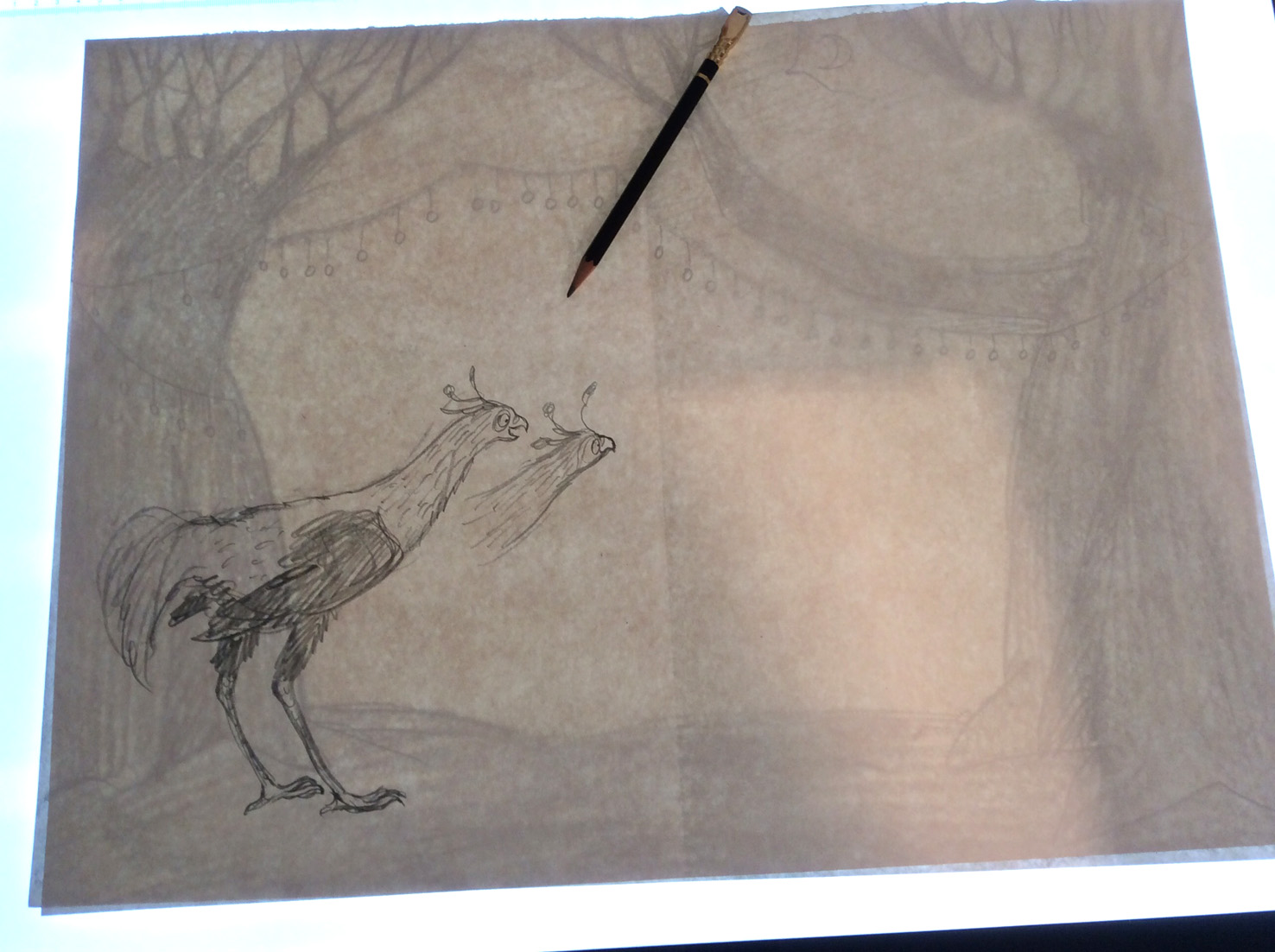
light box in action

I’m still excited about my new light box. It’s much bigger than the trusty old one. It gets brighter or dimmer if you hold your finger on the power button! Sometimes I do that just for fun.

You may be able to see that one spread looks rather a lot like the (empty) stage of a theatre. It’s not a stage, but I quite like that it looks like one. And I like that I can sketch the characters freely on a separate sheet of paper over the top of the scene. I suppose this is what animators used to do all the time.

20-21 muso initial sketches

These are my first drumming bird sketches. It’s been interesting to work out how the bird might play the instrument and how much to simplify or modify the instruments from those in the real world. I liked the bounce in the woodpecker trio at top left but I came up with a much better drawing later. The first one I drew here was the duck and that drum looks most unstable. I’m not sure it’s even three dimensional!

I worked out a great plan (my 25th) for the cover of Leonard Doesn’t Dance in the shower the other day. I often draw Leonard covers on the shower screen. It is an important part of my process and one of the more literal interpretations of bird immersion. Luckily I have imprinted the idea almost perfectly on my brain, because when I went back to the bathroom to photograph the cover design, it had melted away….

That reminds me, I need to buy another back-up hard drive for my computer.

And lastly, for those of you who are interested in bird immersion in general, (you may be the kind who browse the chickens-for-sale ads) did you know that some chickens can swim? Go here to see the most gorgeous Buff Orpingtons in a swimming pool.

It should be added at this point, that we had to rescue Stella from the fish pond a few weeks ago as she fell in and did not seem to have the required flotation skills.

(Why does ‘floatation’ look wrong?)


Leonard dances on (part 2)

Having had a lot of fun with my digital collage and brushwork, I picked up the dip pen and filled my inkwell once more to explore Option One.

pen and ink crooner judywatsonart

Dip pen and ink with real wash. 

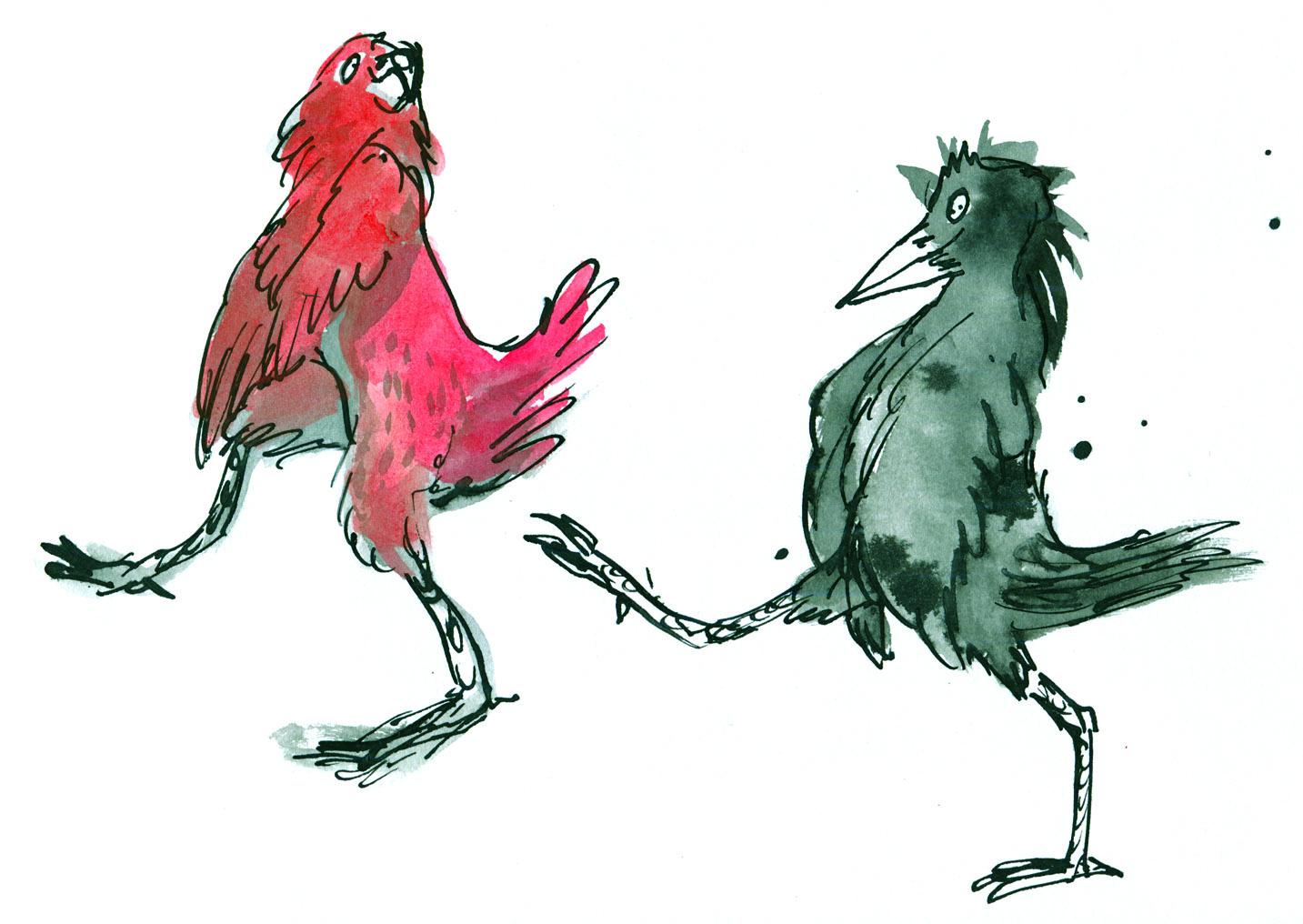
Having fuddled around with birds for some weeks, I felt warmed up. My drawing hand was in action again. I was feeling a bit racy. The big brushy birds were fairly cumbersome in terms of getting the dance action going, and I wanted to see how these birds might actually look dancing; particularly in pairs or groups.

So here’s where my trusty dip pen came in. I used the same one for the whole of Thunderstorm Dancing and I’m not sure what I’ll do when this particular ratty nib gives up the ghost. It’s pointy and twitchy and zippy and once the pen hand is warmed up, the quicker the drawing, the better.

In my first sketches, I referred to pictures of people dancing. The birds looked rather hilariously like people in bird costumes.

pen and ink crazy peoplebirds lores

pen and ink ridiculous birds

Seriously, what???!! Must be stuffy in those bird costumes…

pen and ink person to bird lores

Here you see me trying to figure out how to turn a human dance pose into the equivalent bird pose. Doesn’t work. The bird’s leg joints are so different that when forced into a corresponding pose, they become stiff and awkward. 

pen and ink john travolta lores

John Travolta? 

They were terrible. After that I put Fred and Ginger aside. Phooey! Better to just look at birds and make their gestures approximately dancelike. Despite my lack of dance expertise, I could put more of an expressive spin on a bird drawing without scrutinising a real dance move.

Then it became more fun. These birds were attending an imaginary ball. I gave them names. Just because.

pen and ink tiara

Spotted at the ball this evening – Miss Ophelia Oriole in yellow cape and tiara.

pen and ink orange pair

Melva and Gene Shufflebottom set the dance floor on fire this evening. Luckily, no one was hurt. (That’s from Thomas the Tank Engine. Some of you will recognise it.)

pen and ink blue green pair judywatsonart

Sparking rumours this evening at the ball, Adele Coiffe and Thomas Furle were inseparable on the dance floor. 

pen and ink cindermallard

A Mysterious Mallard wowed the guests at this evening’s festivities, but departed hurriedly at midnight, leaving behind a puddle of water. 

pen and ink crooner judywatsonart

A starling vocal performance was given this evening by Steve Brash, with backing vocals by the Fluffies. (not shown.)

Lastly, I spend about 40 minutes whipping up a page spread in this style to see how I’d go with drawing a crowd. It wasn’t so great, but it was good enough to act as a sample for discussions with the editorial team at Harper Collins.

pen and ink rough spread judywatsonart lores.jpg

This sketch is coloured digitally, so that I could get a quick idea of how it might look. It’s very rough, and fairly energetic. I like the energy. It reminded me of a picture I’d done for the Ernie and Maud series years ago. Particularly the duck in the middle, waving to a friend. (There was an excellent hot air ballooning duck in that story.)

Greatest Sheep in History judywatsonart lores


I’ll be interested to hear what treatment you would have chosen. But I have to say voting has closed and the team at Harper Collins voted unanimously for….

drum roll…

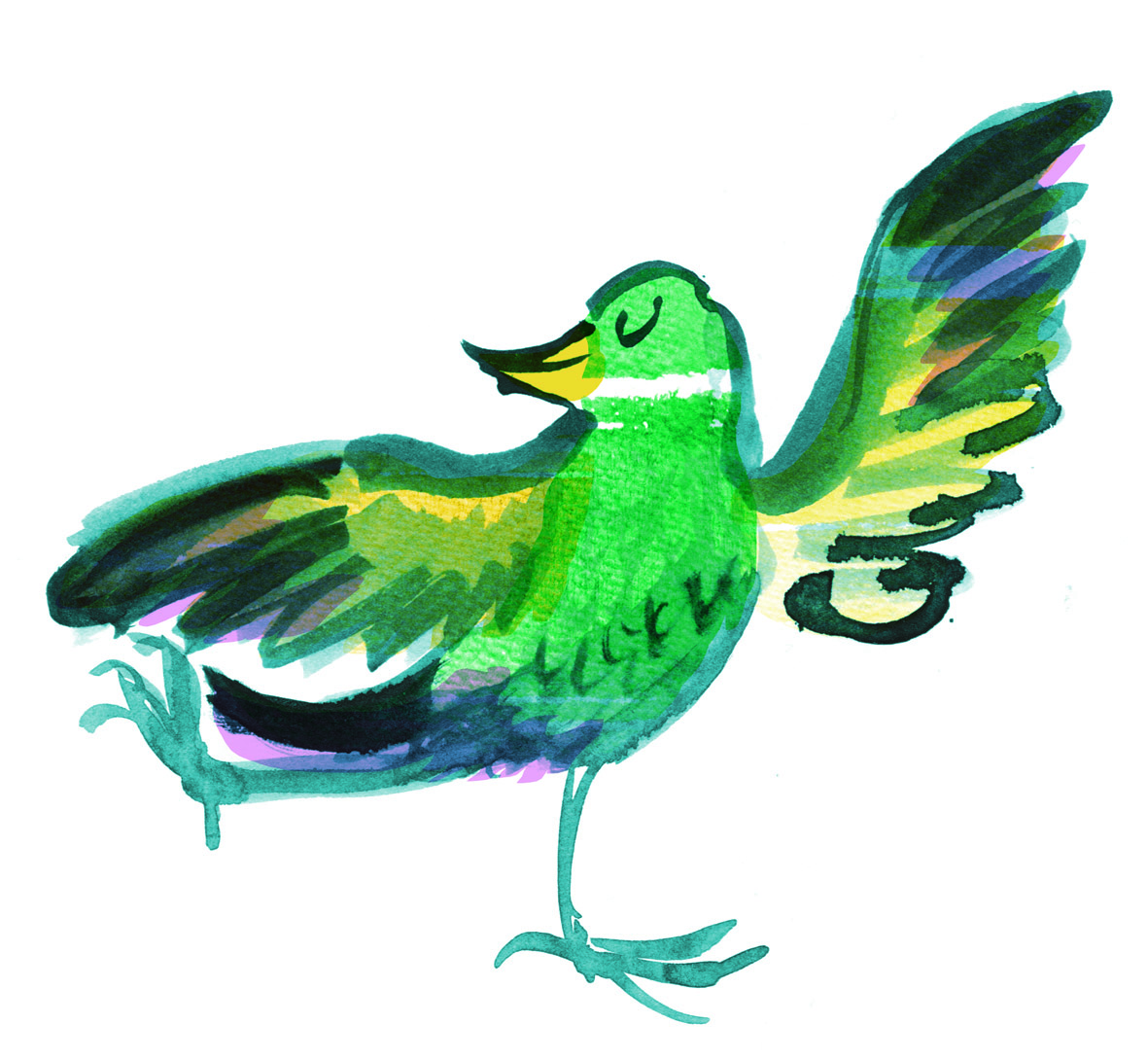
BRUSHY!

brushy green bird

Let the games begin!

pen and ink rats lores

Was it the shoes? Too much?